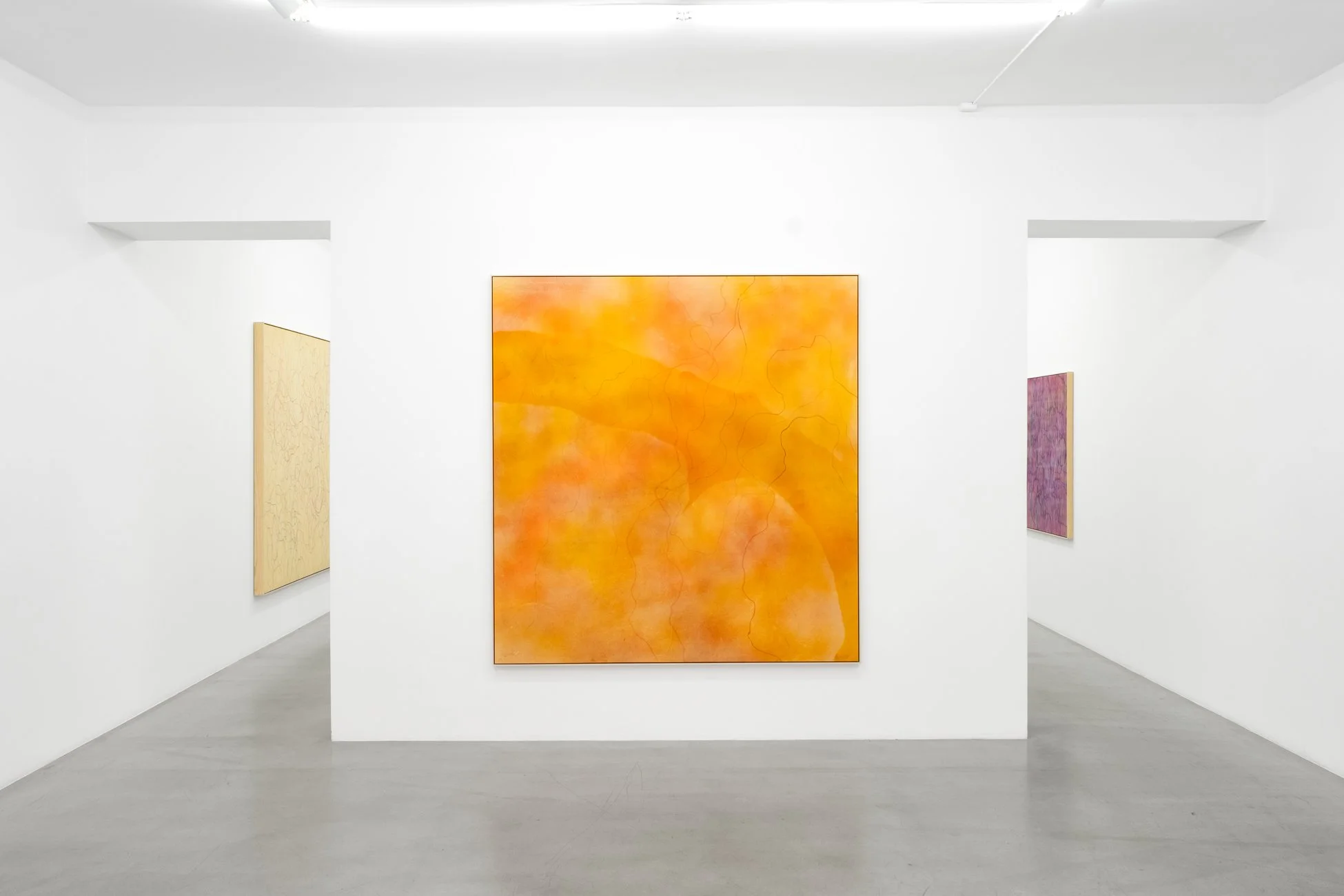
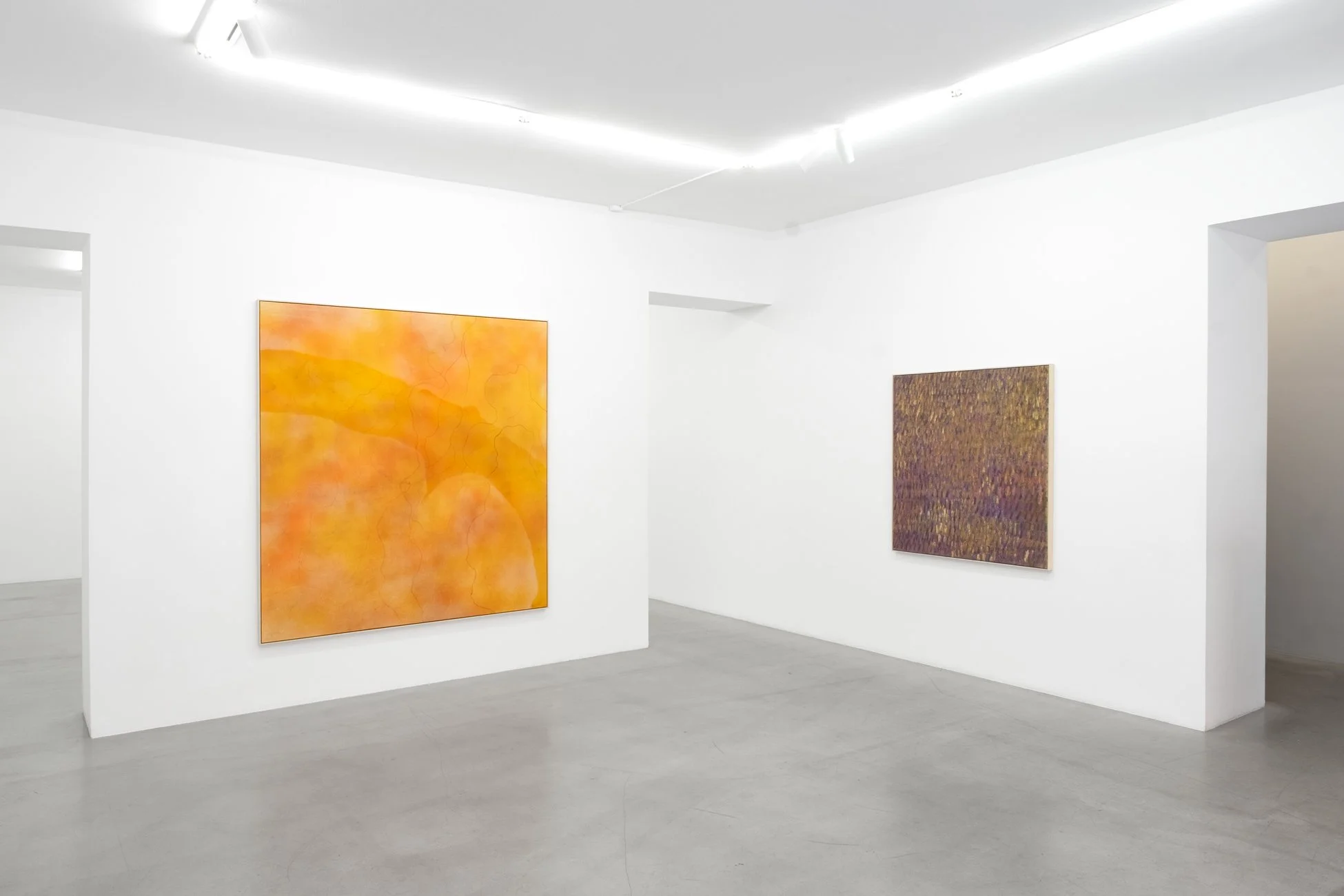
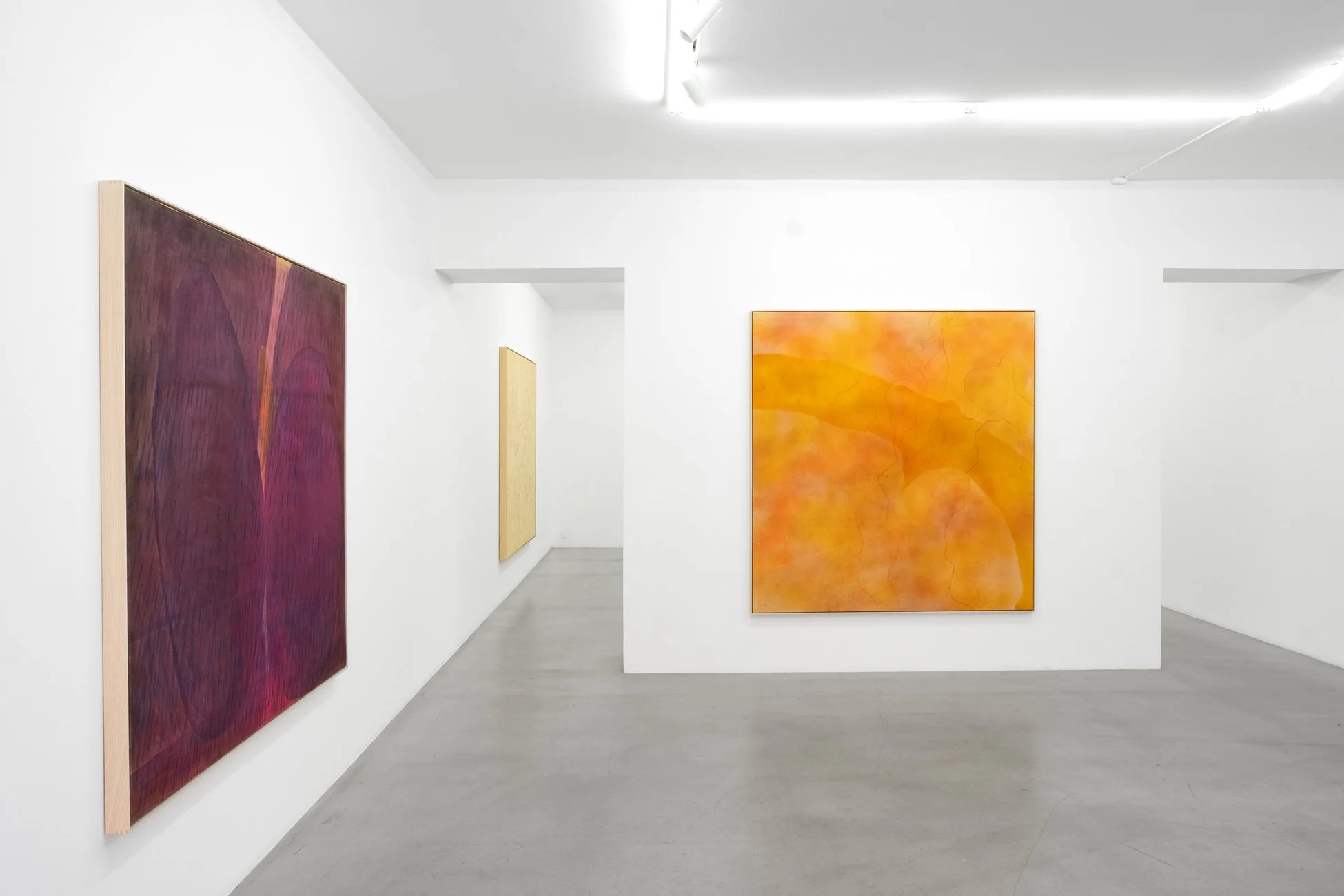
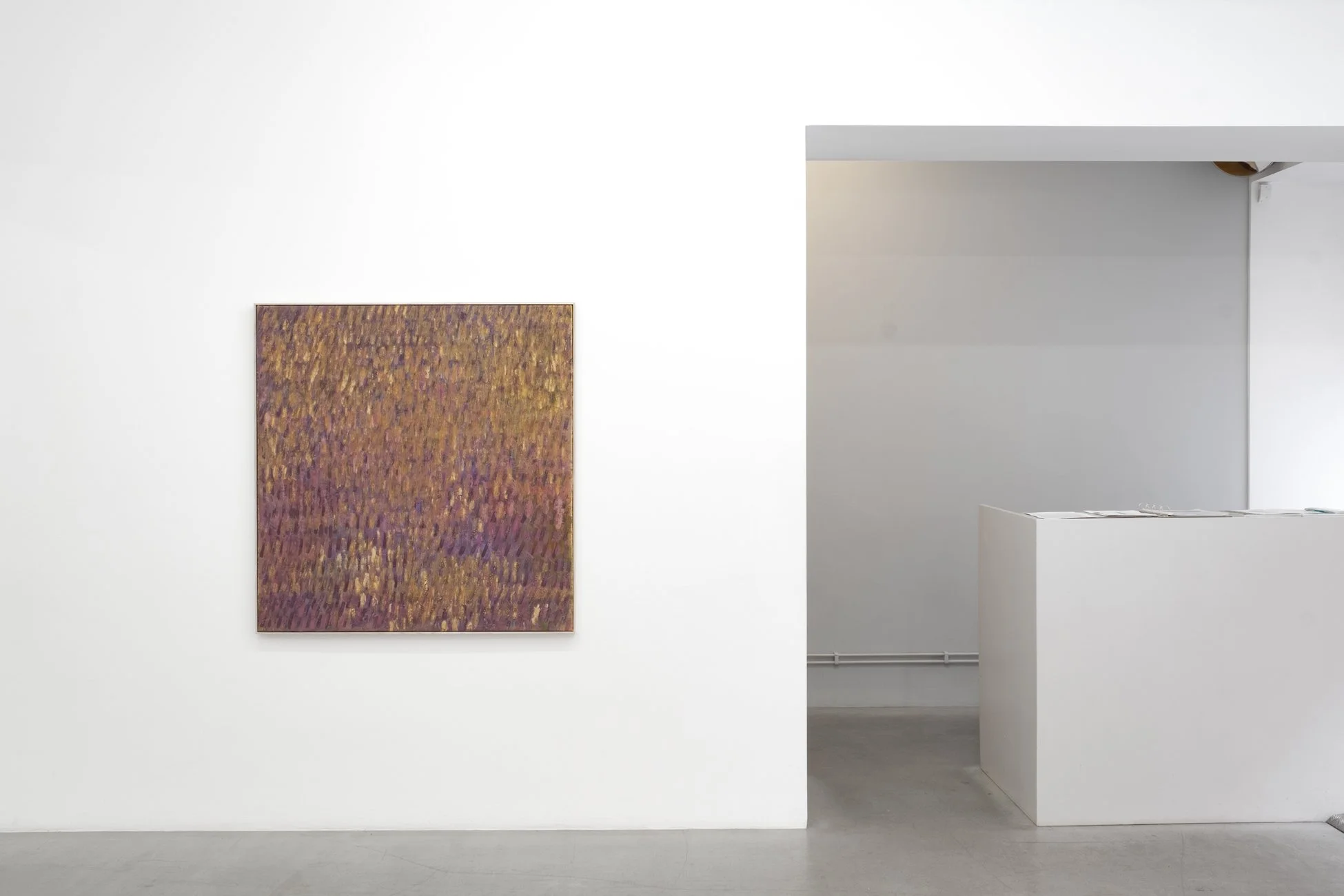
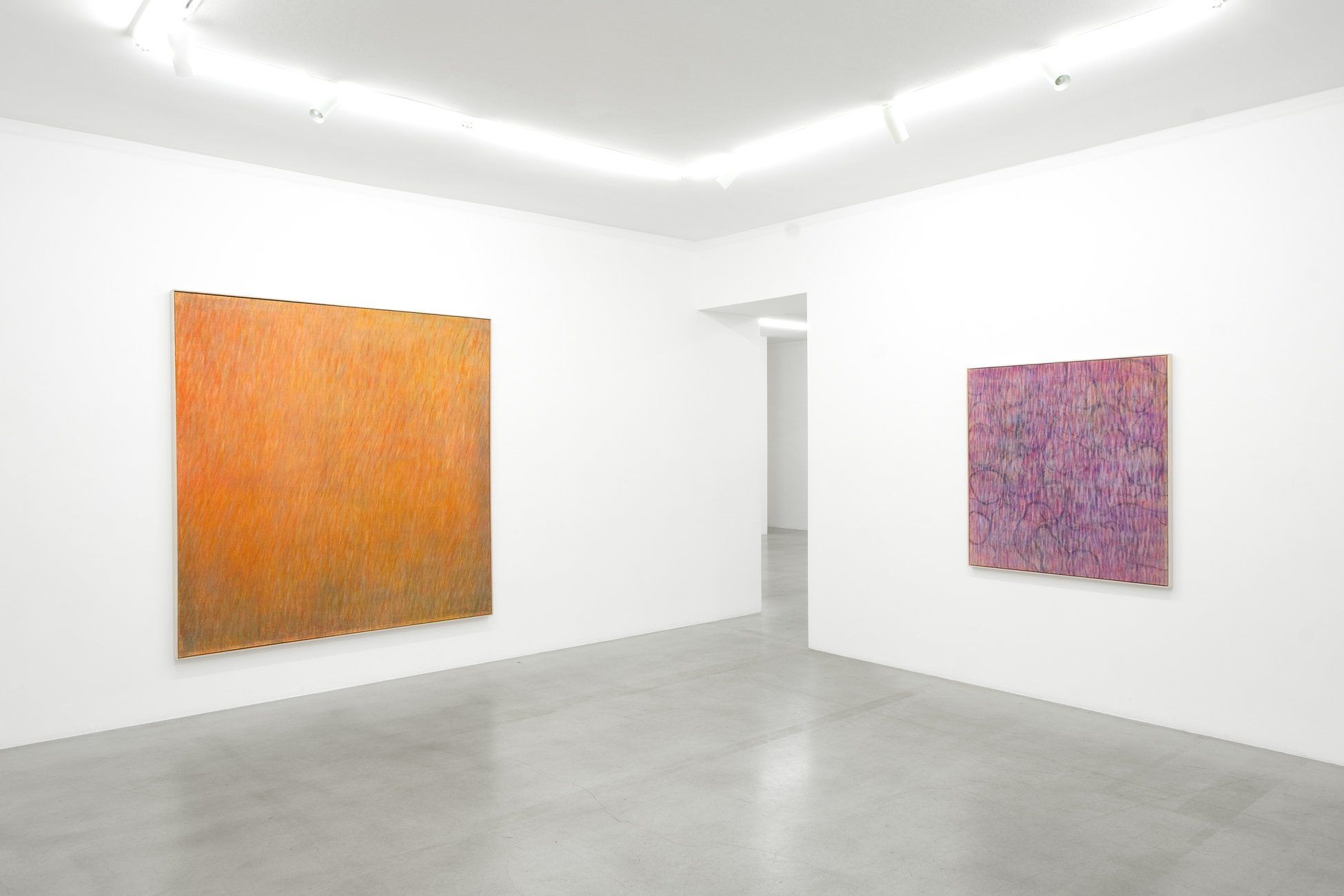
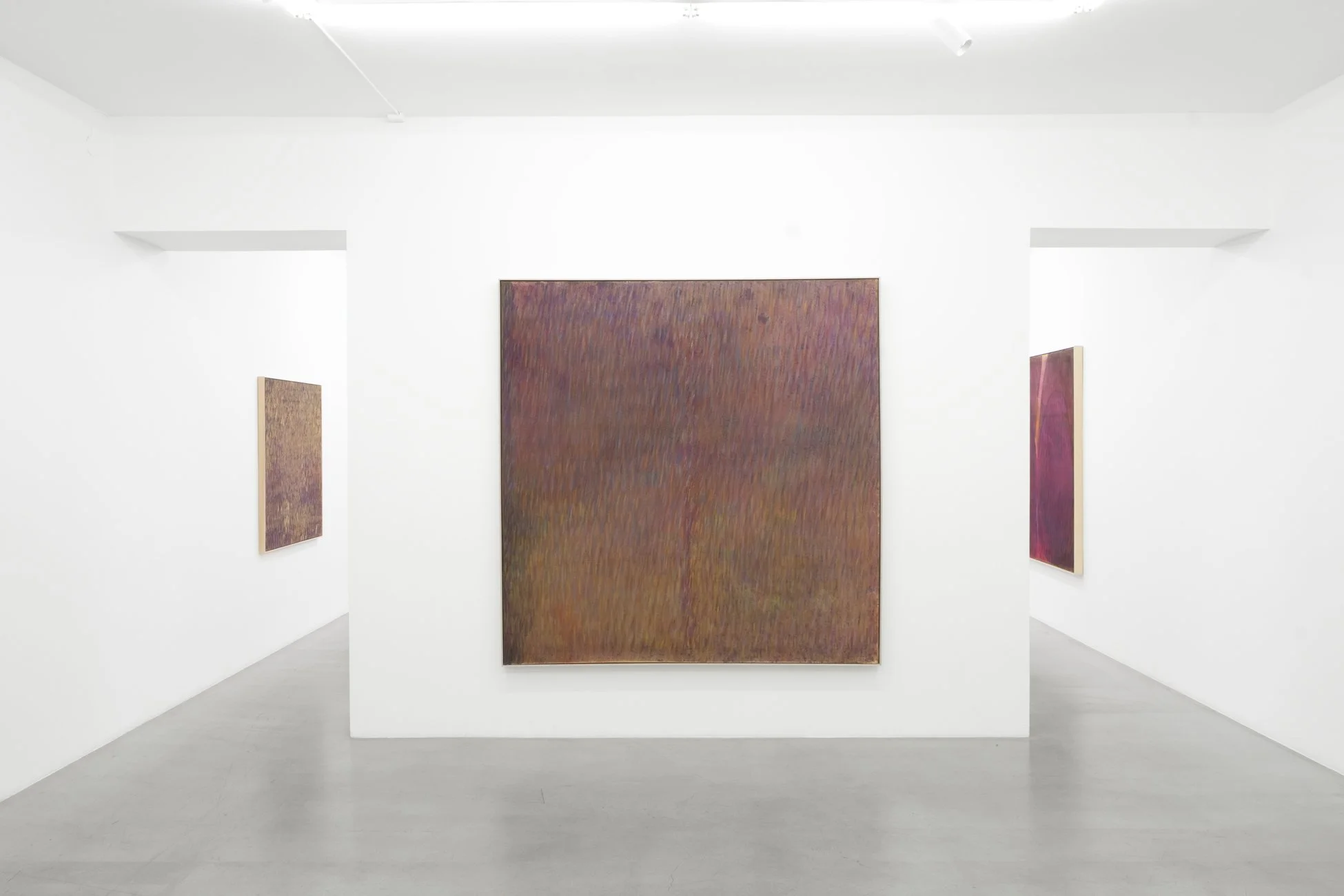
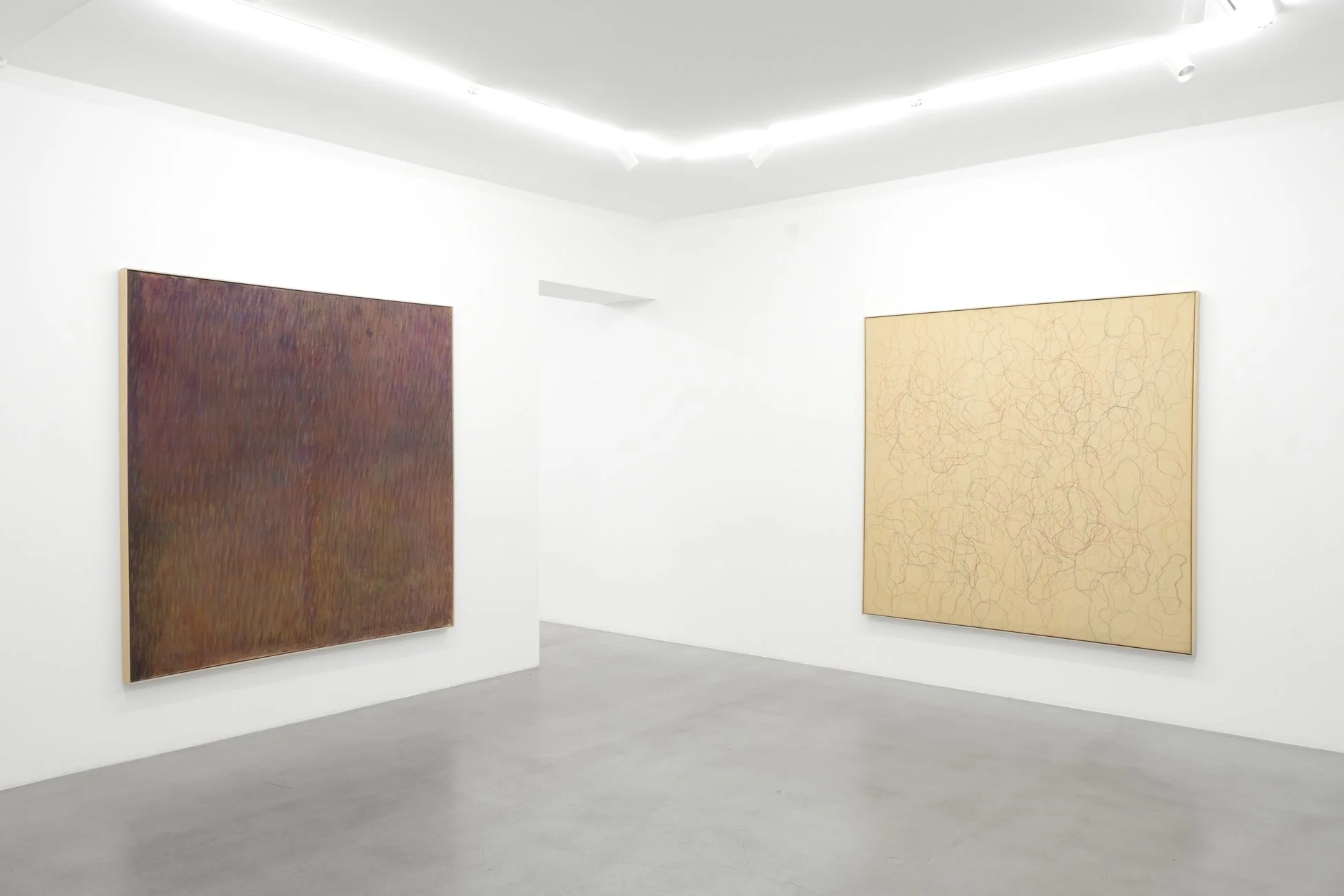
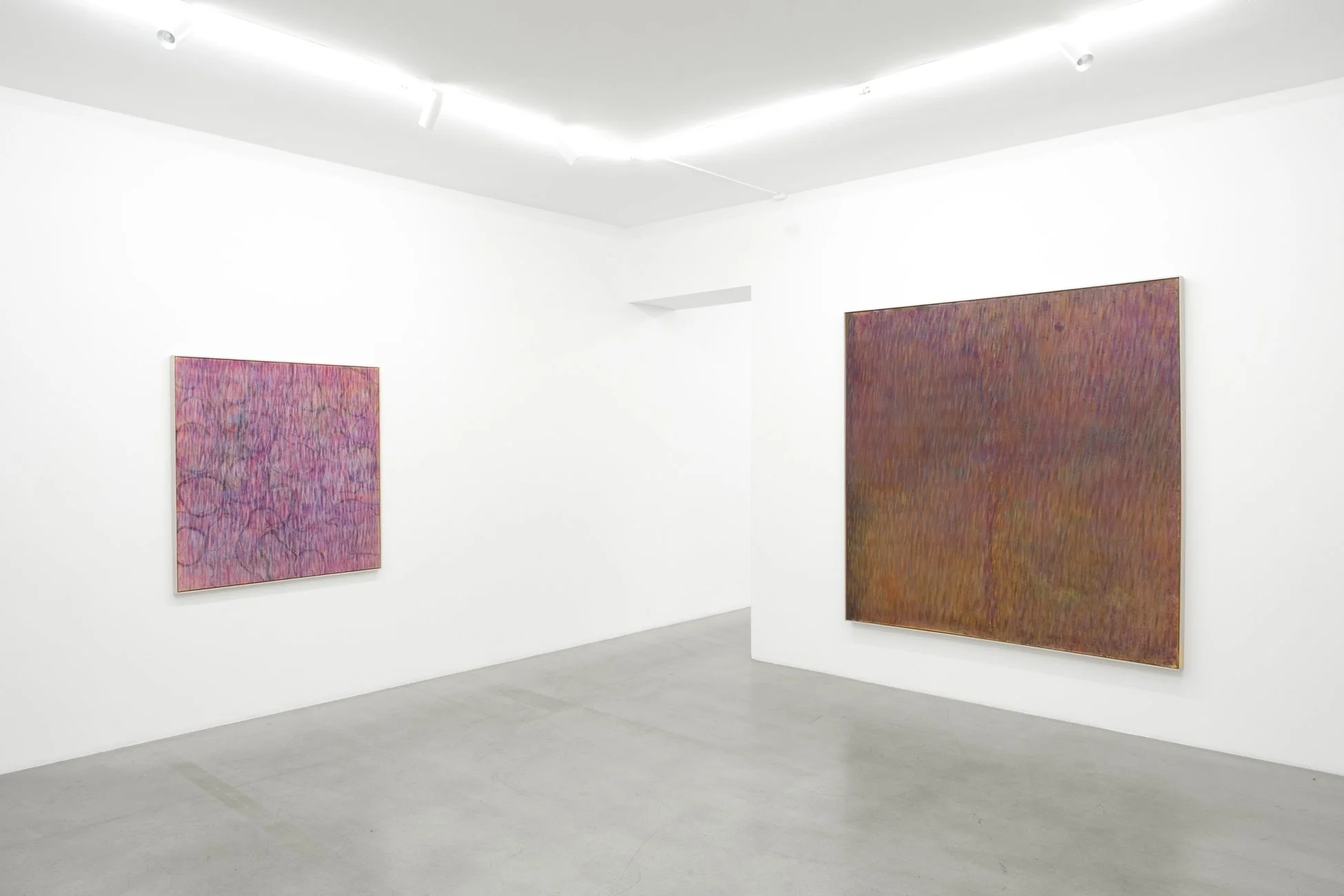
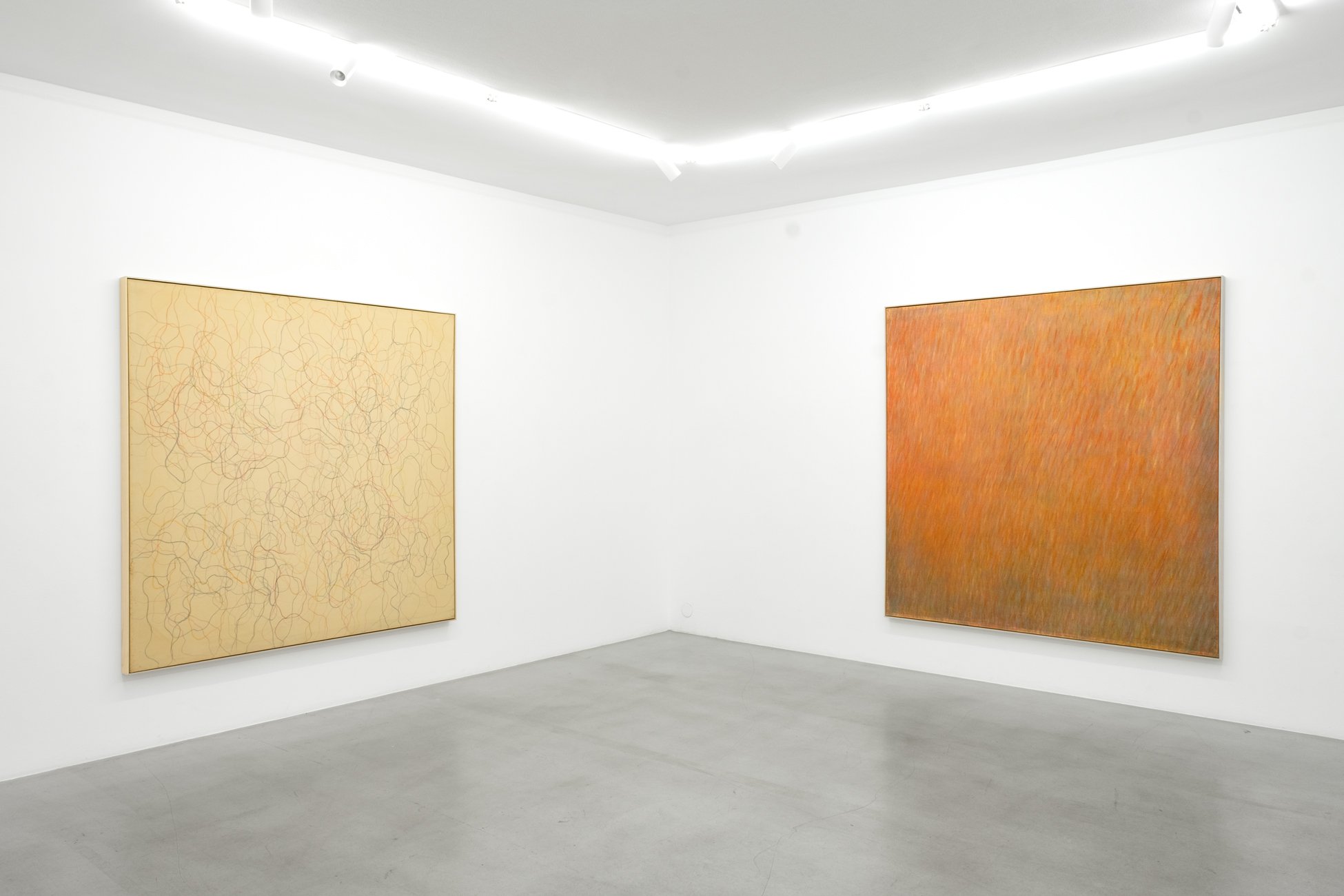
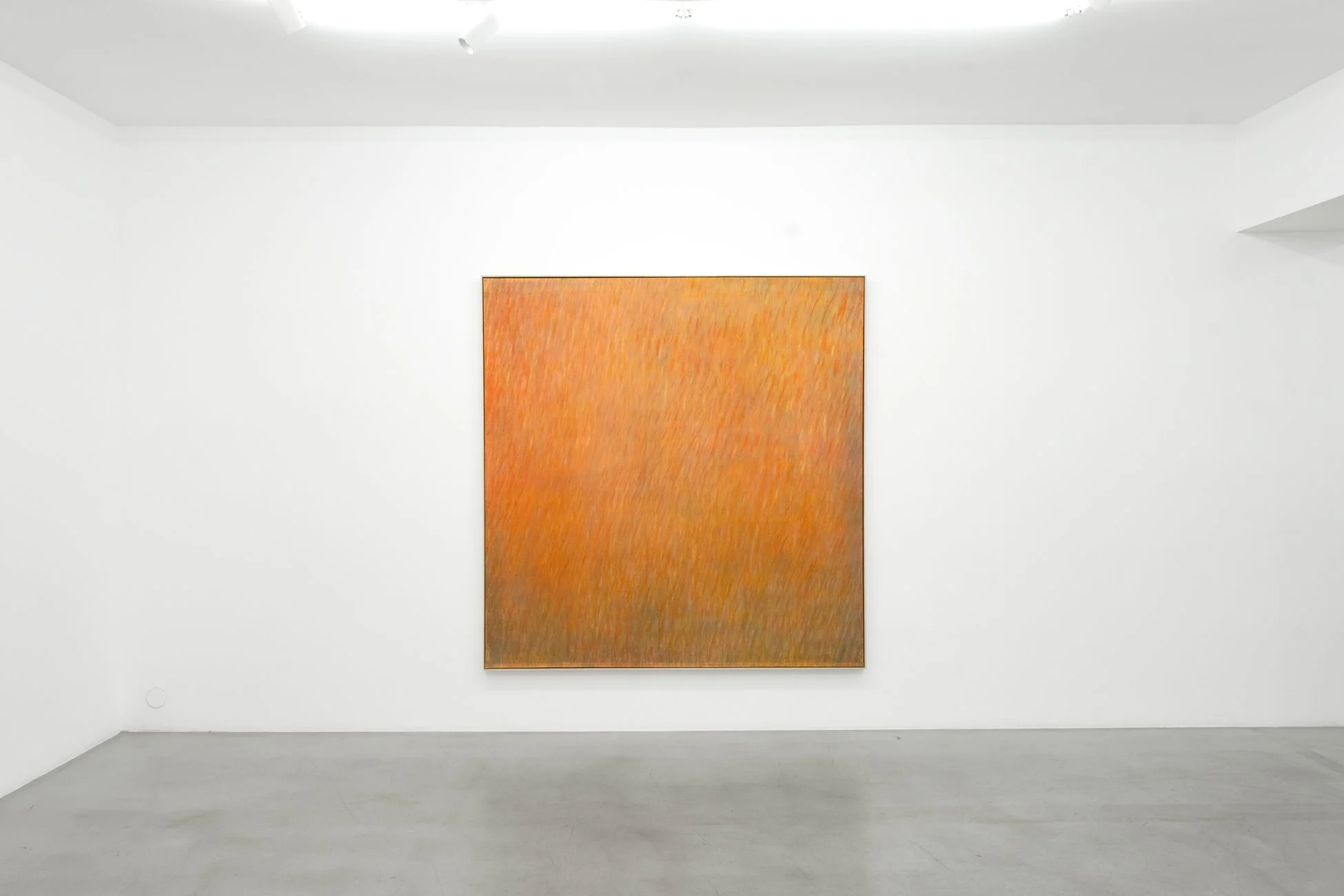
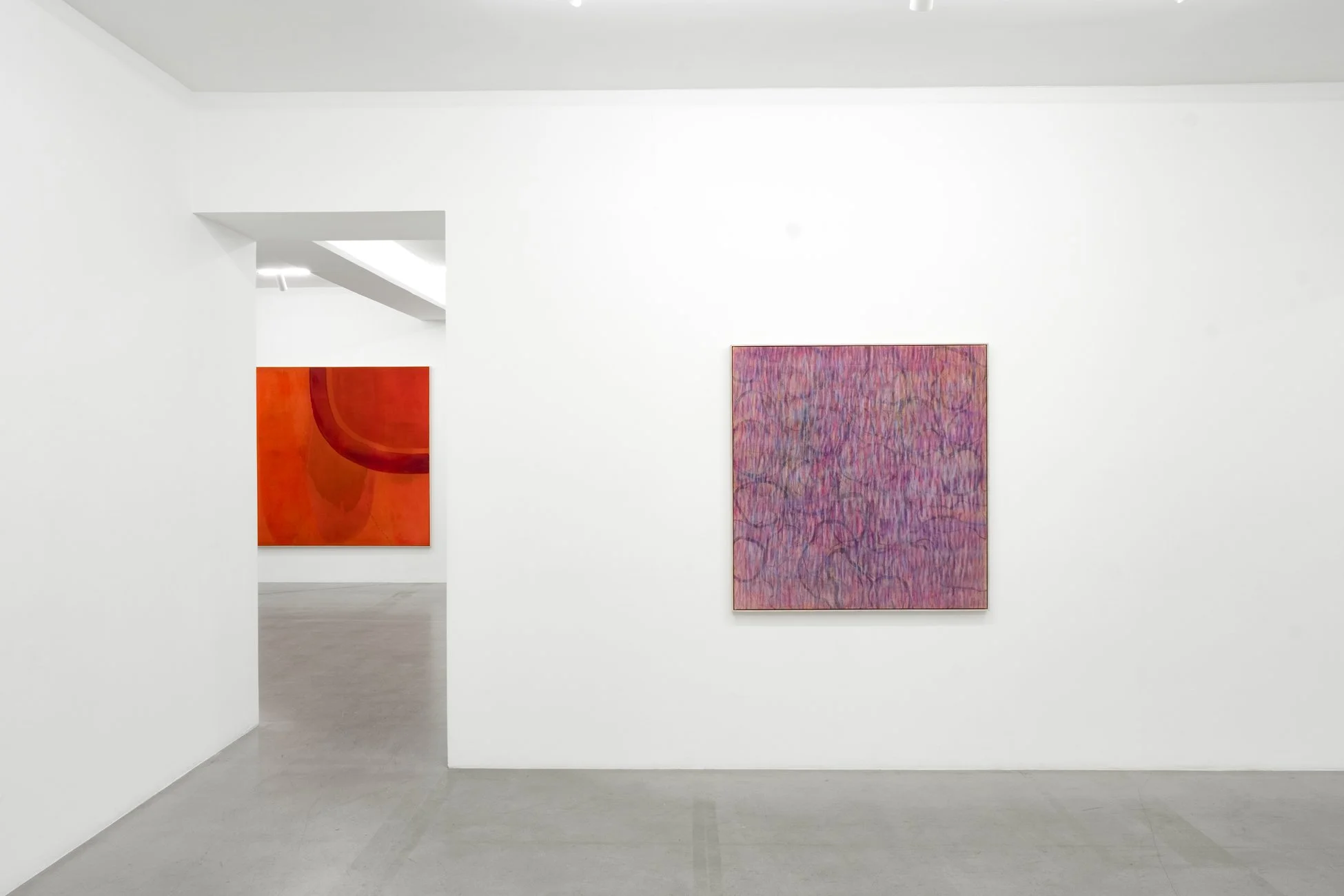
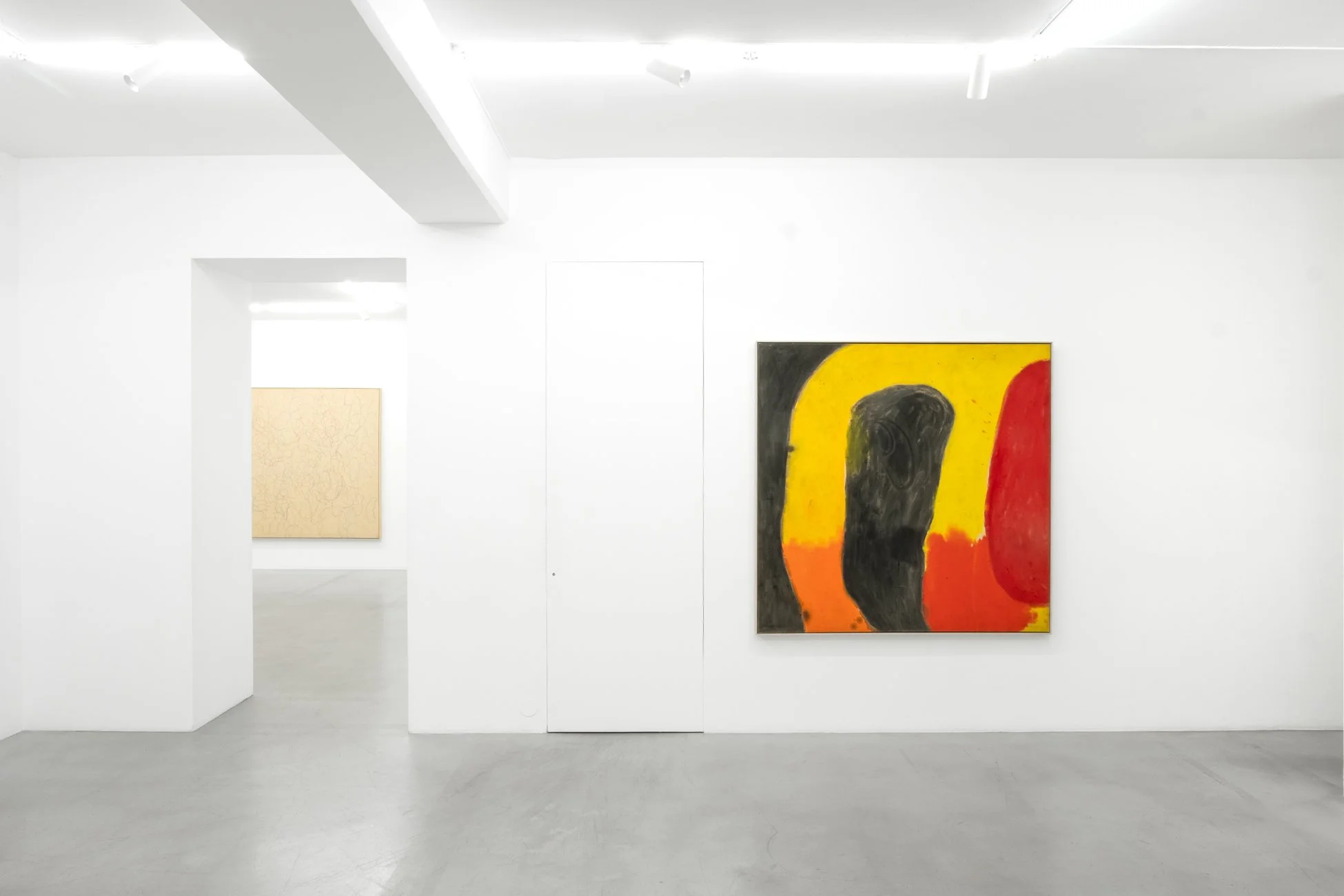
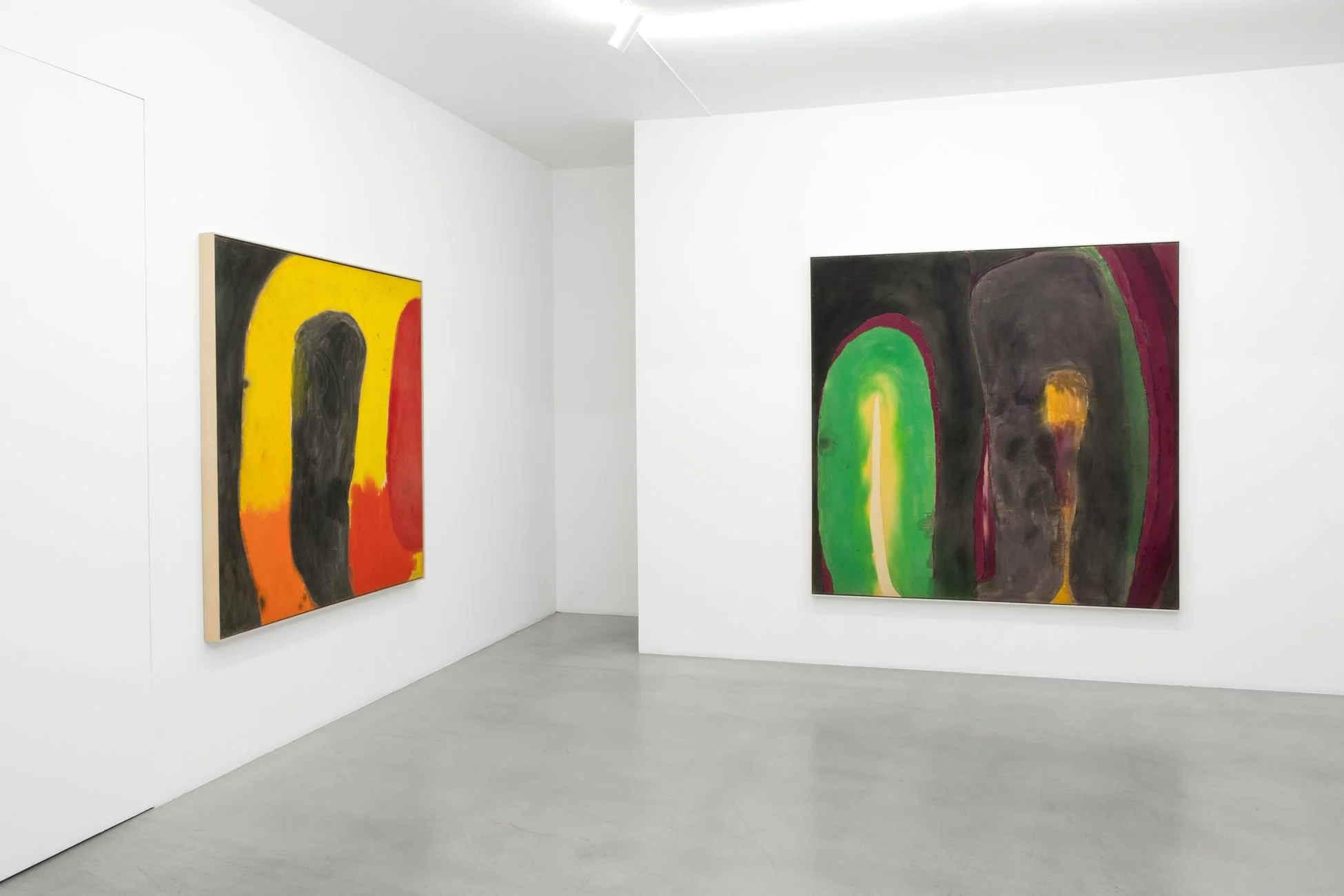
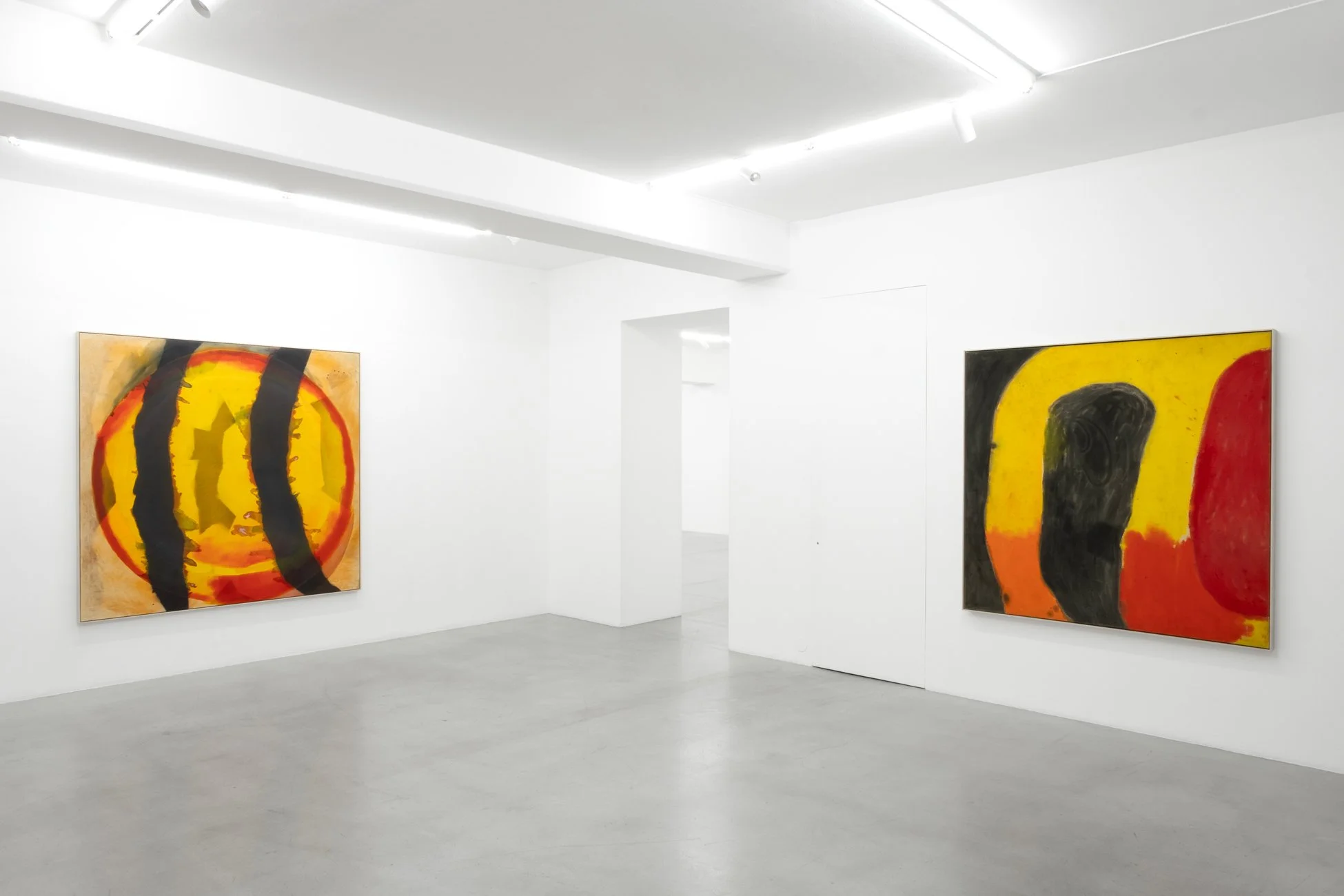
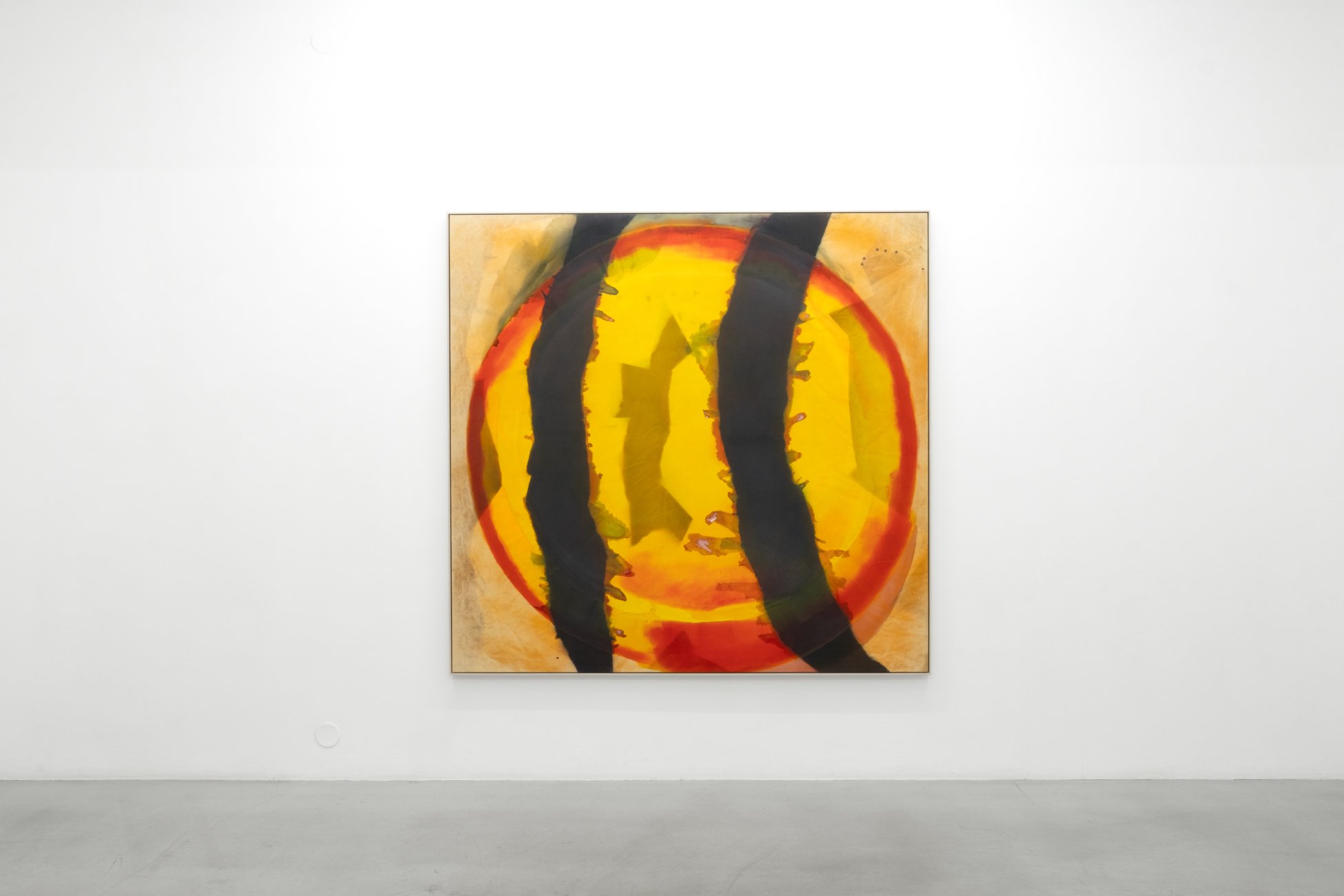
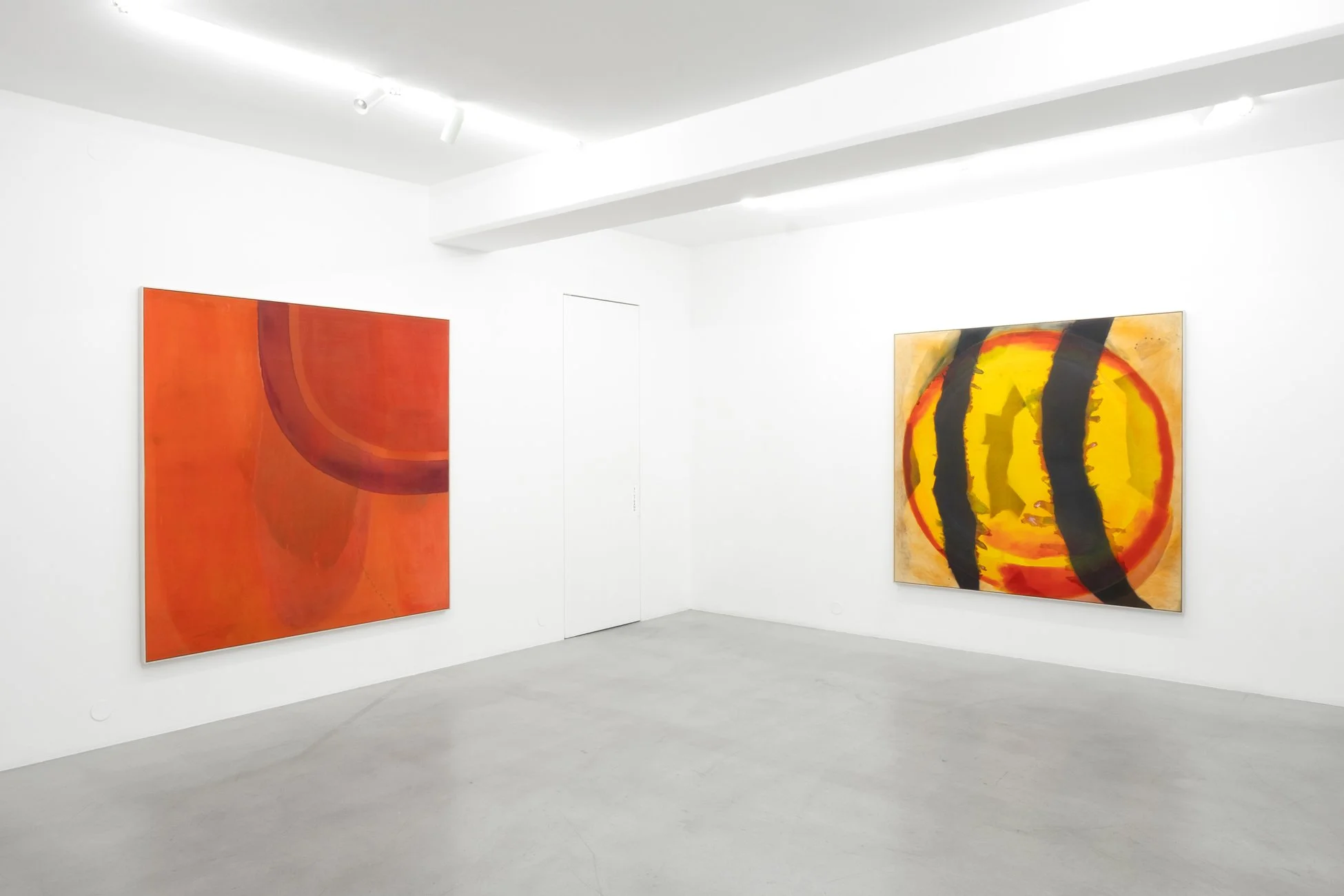
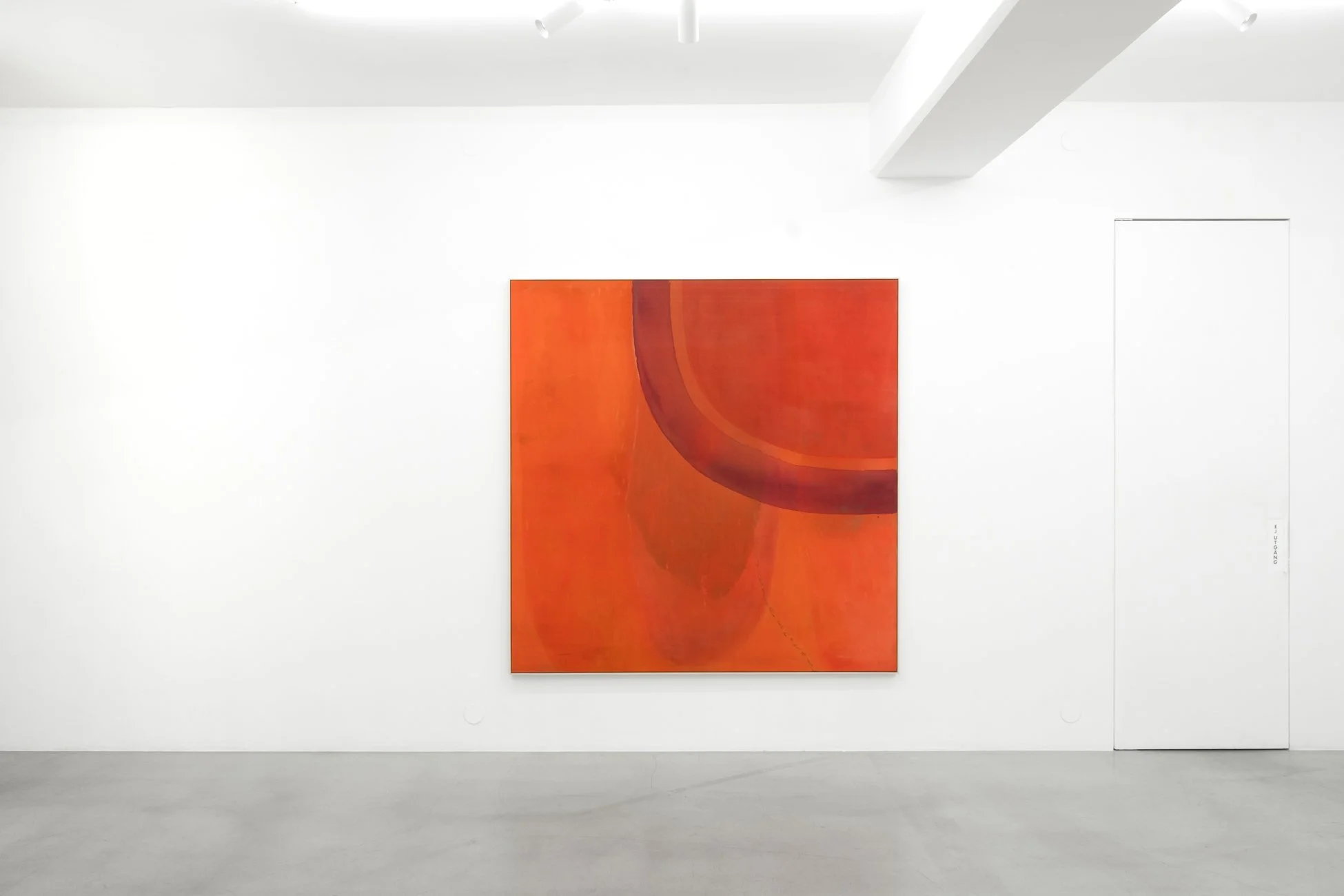
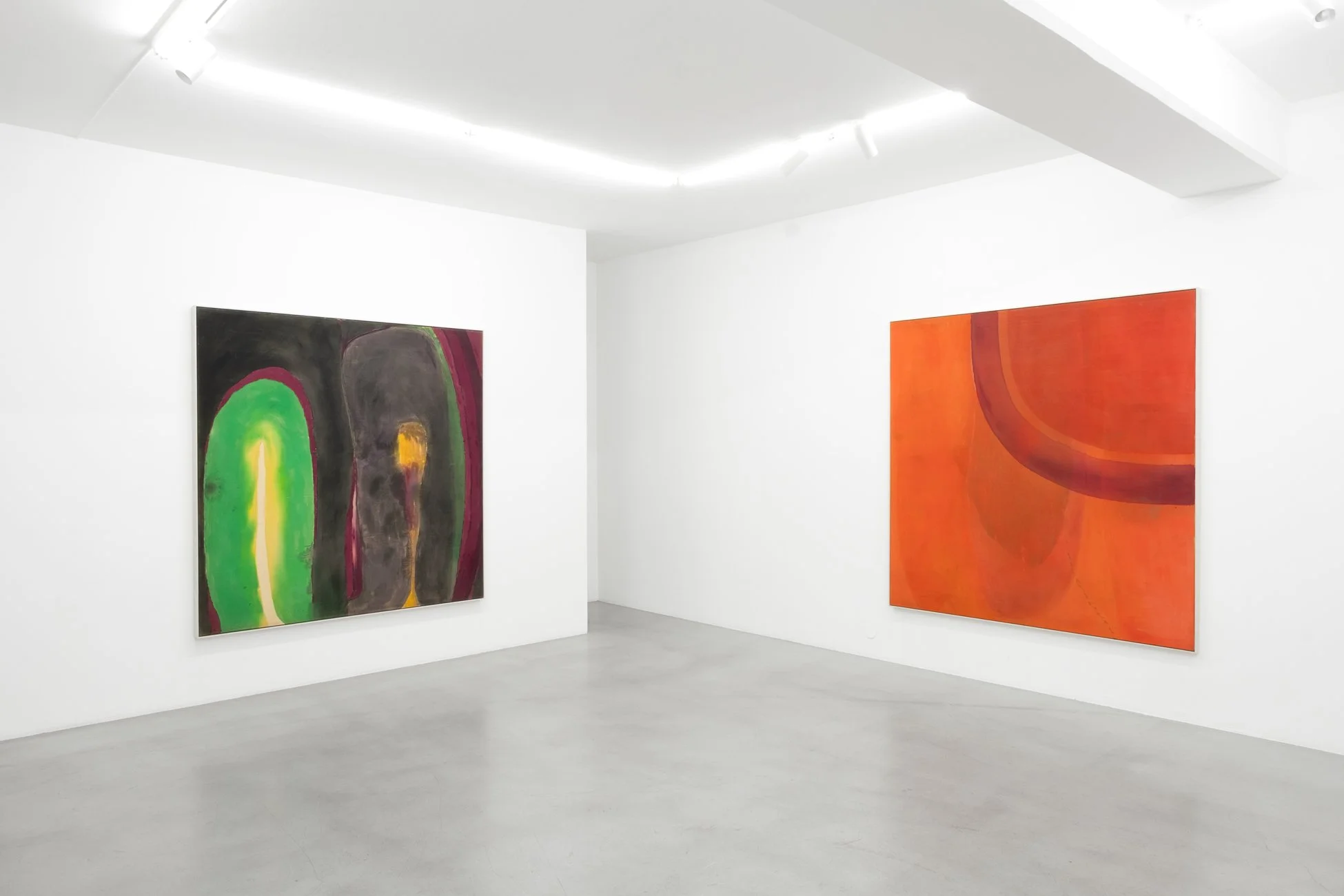
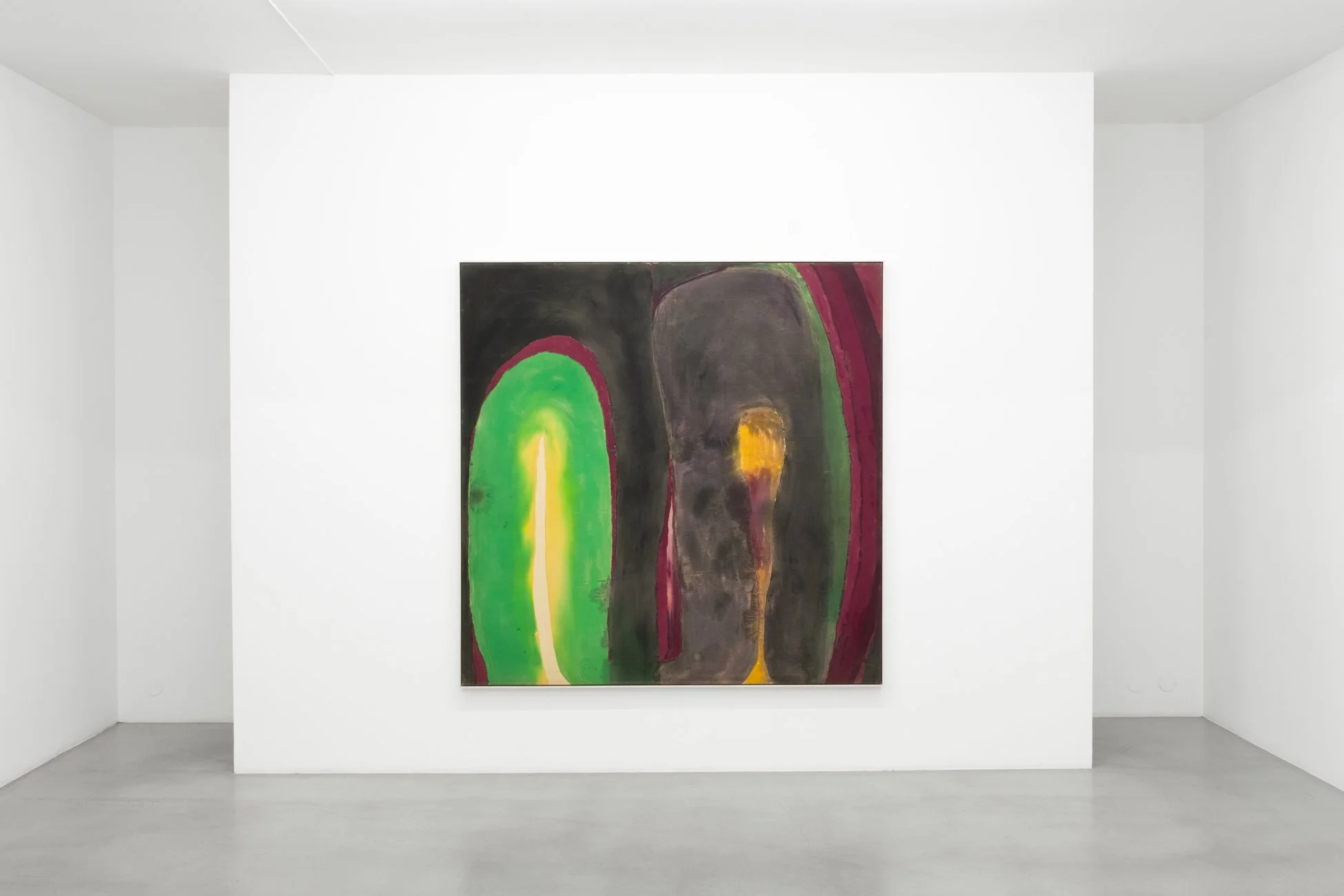
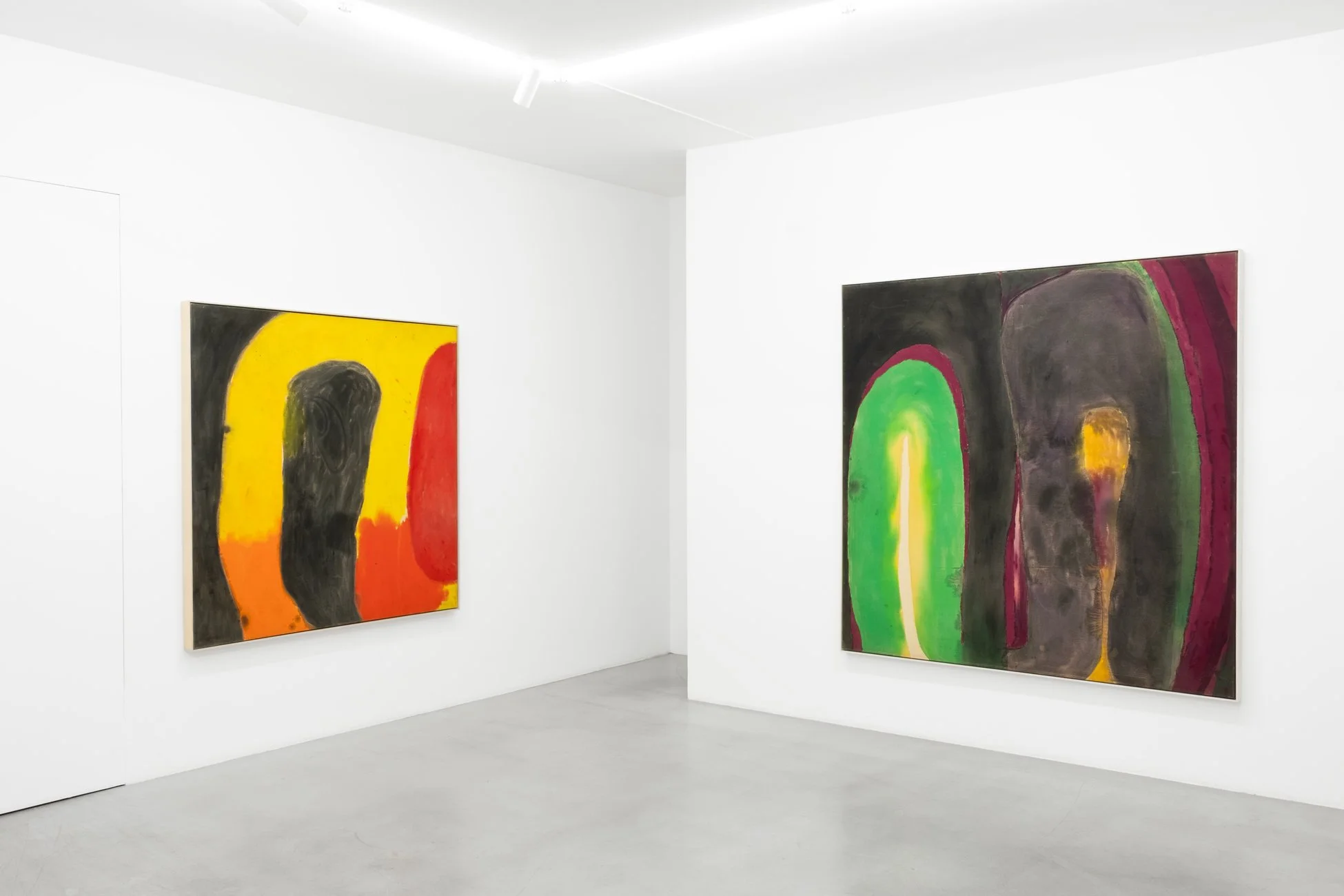
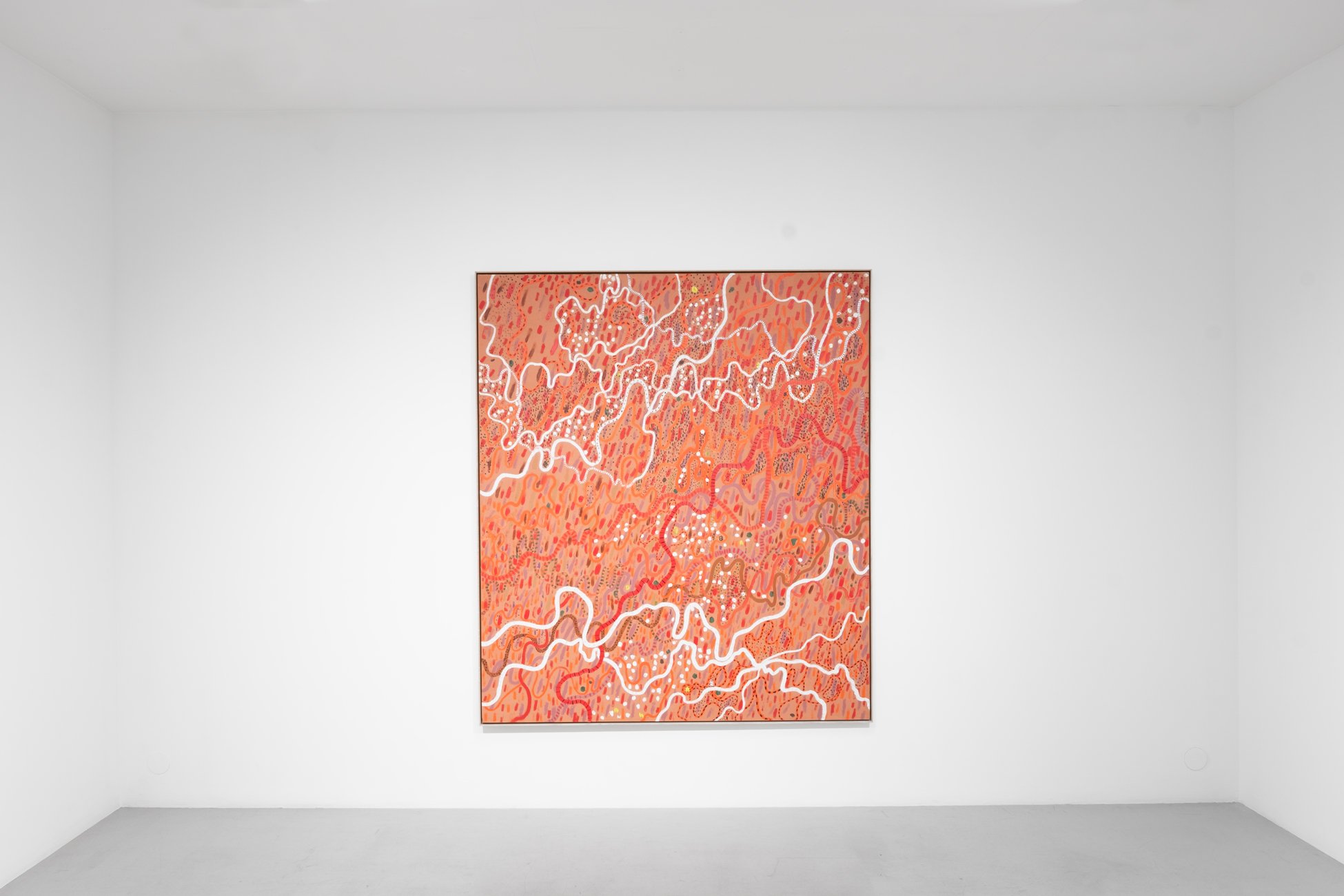
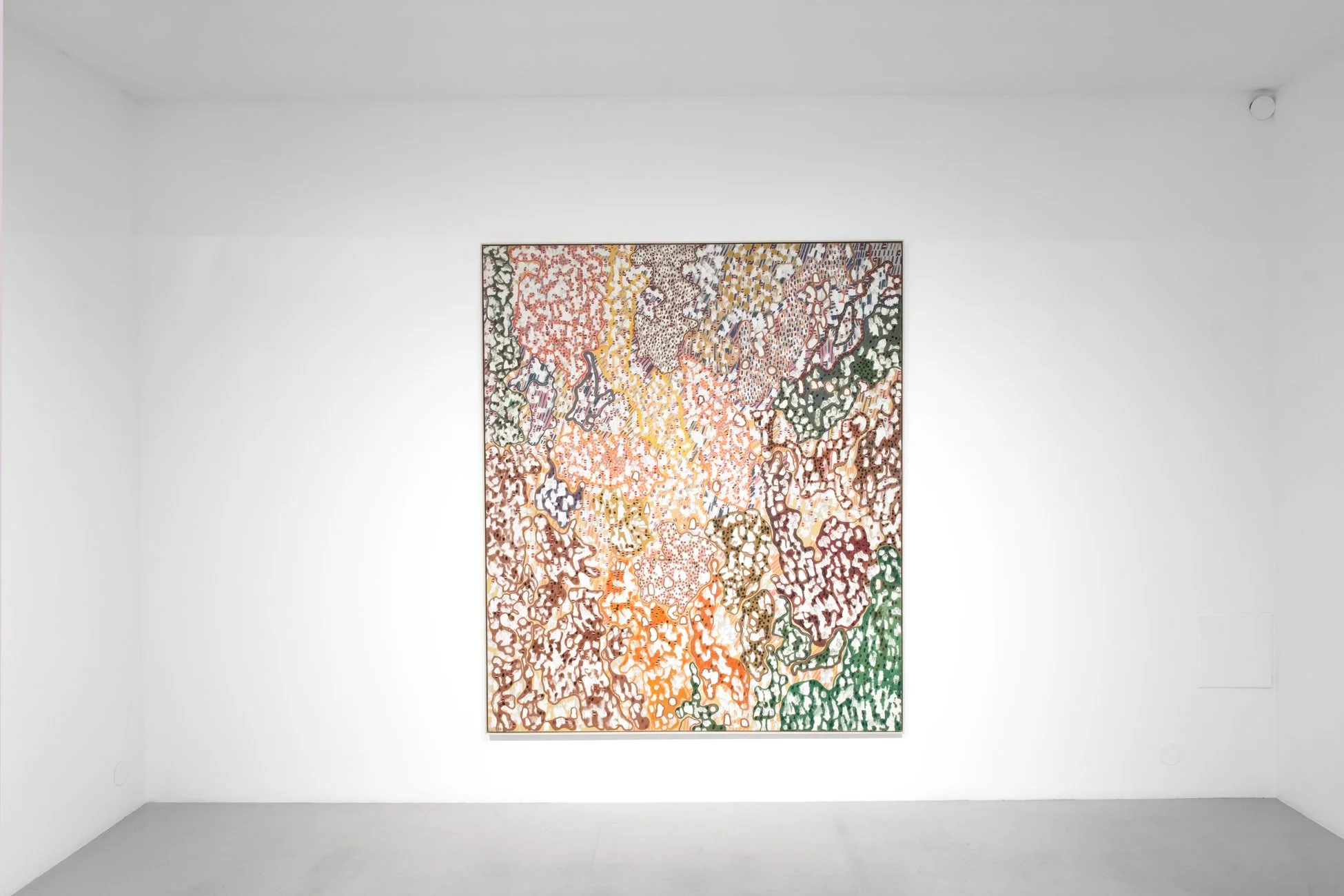
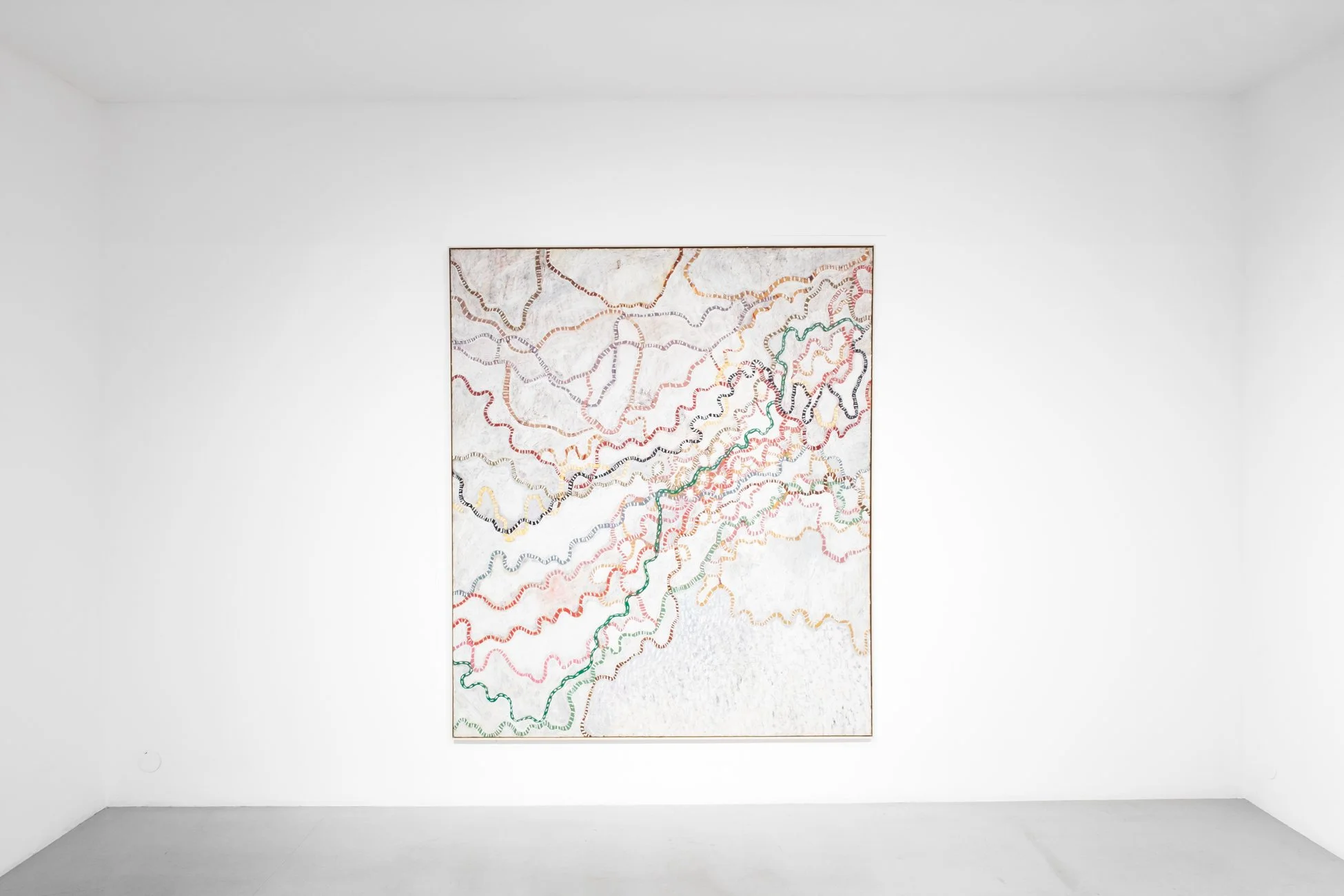
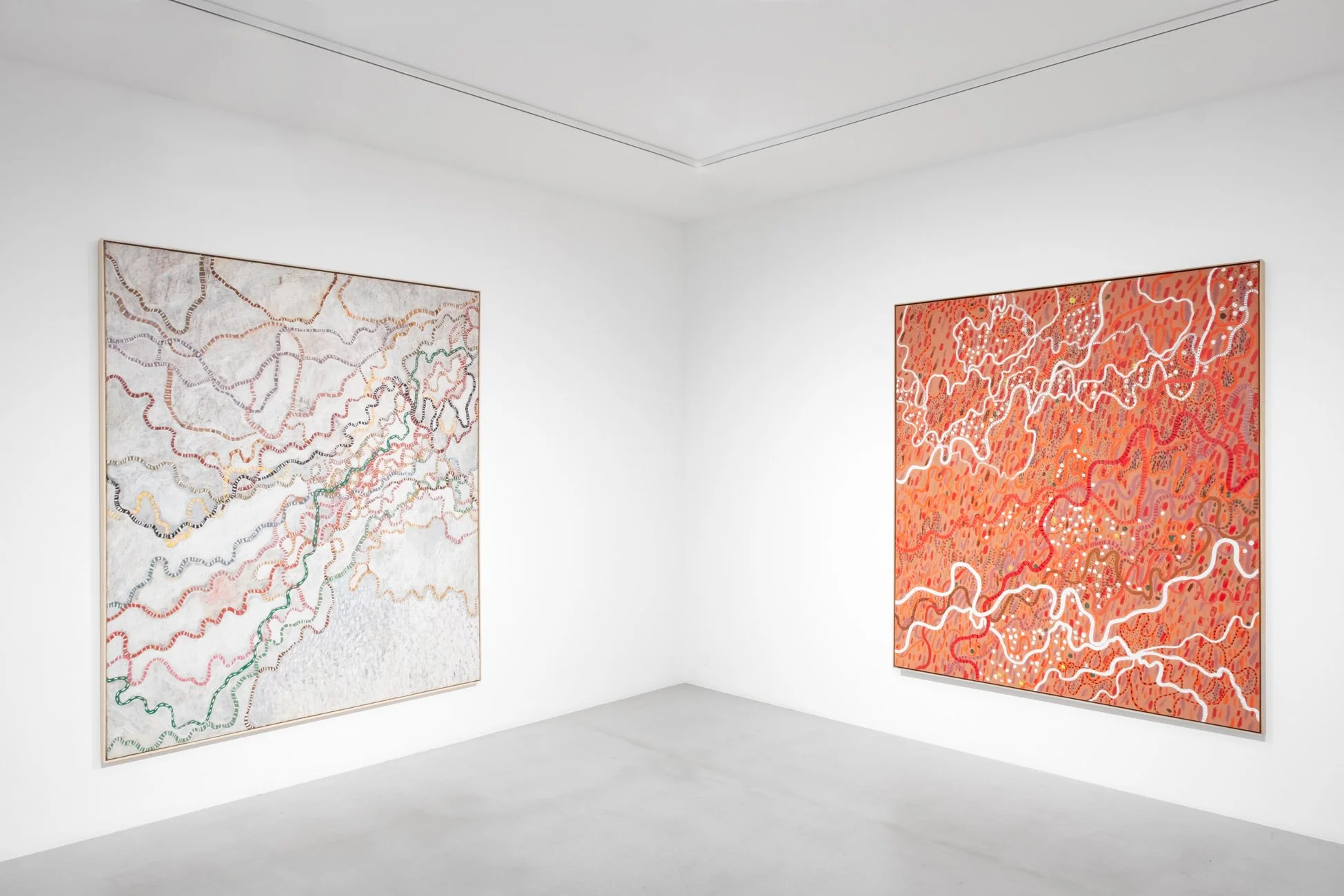
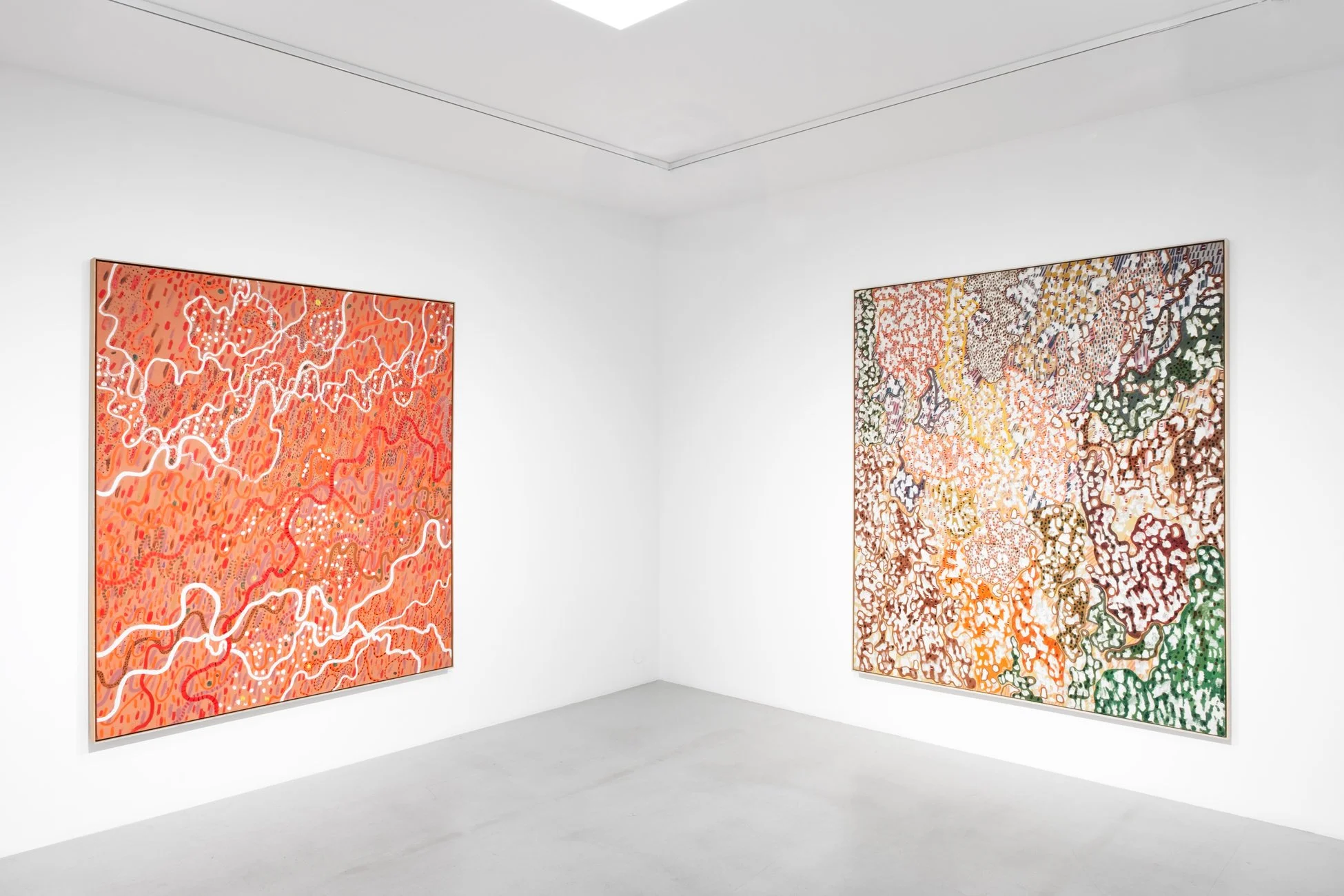
Leino’s handling (of paint), however restrained, admits manifold inflections. The minimal traits are either loosely dispersed or densely crosshatched; they stand out clearly in a serial row or blend almost indiscernibly into the field. Anchoring the infinity of colour to the finitude of the hand, they ground contemplation in a distinctly embodied practice.
Molly Warnock, Art Forum, 2025
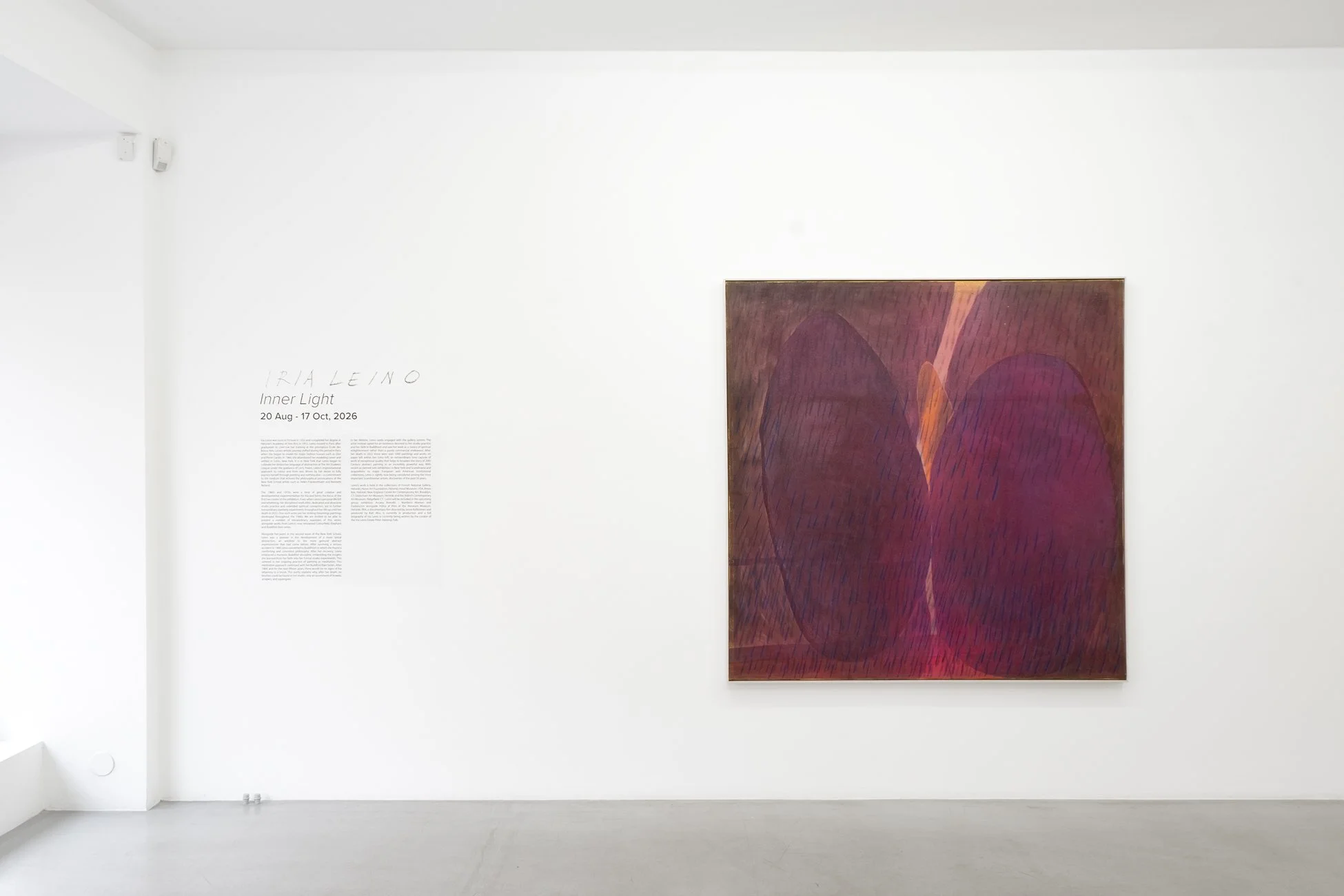
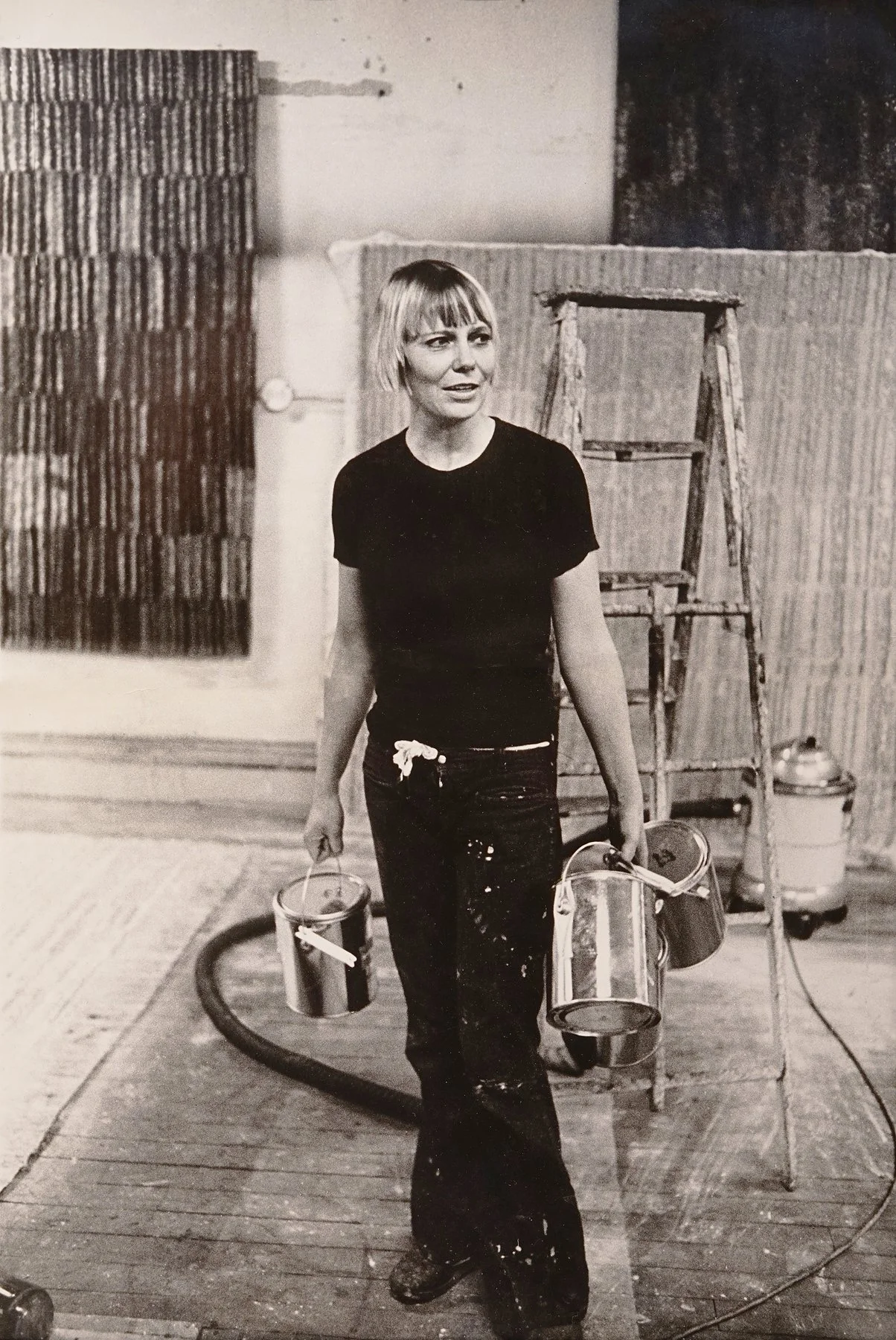
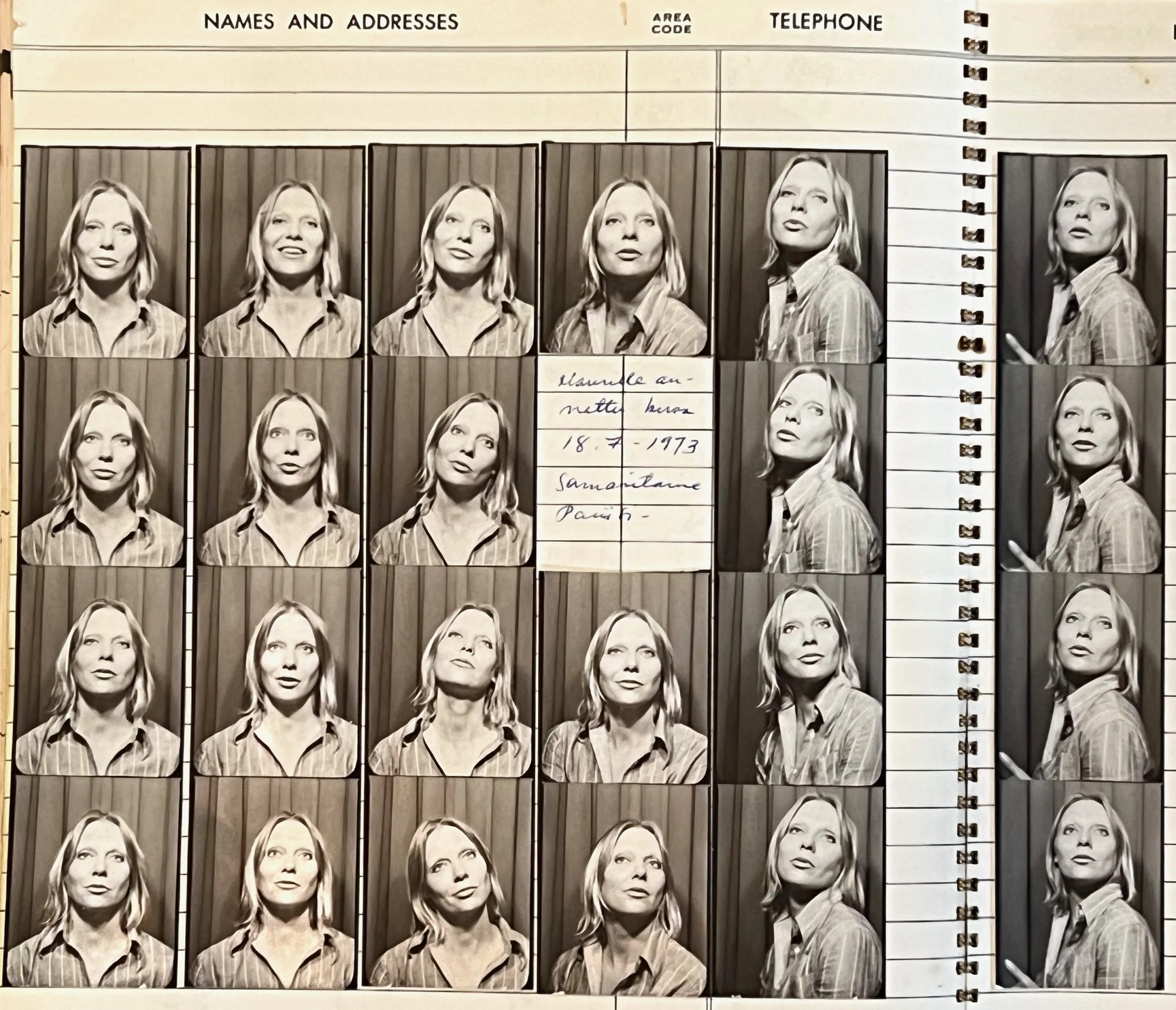
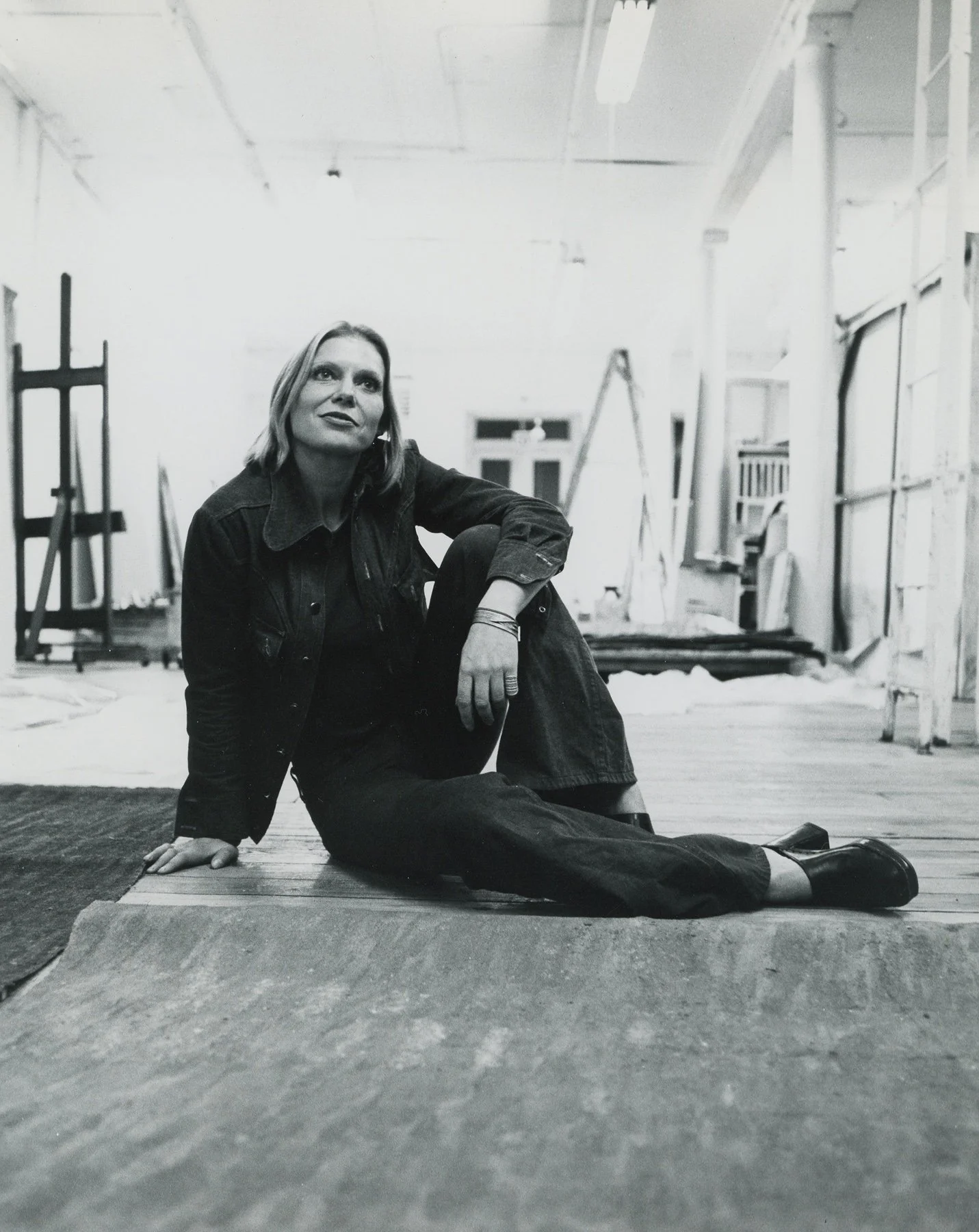
Larsen / Warner is pleased to present Inner Light a solo exhibition from the Estate of pioneering Finnish American artist Iria Leino (b. 1932, Helsinki, d. 2022, New York) This is the gallery’s second solo exhibition of Leino’s groundbreaking work, and follows acclaimed presentations by the gallery at Market Art Fair, Stockholm in 2025 and Art Brussels in 2026. Iria Leino was born in Finland in 1932 and completed her degree at Helsinki’s Academy of Fine Arts in 1955. Leino moved to Paris after graduation to continue her training at the prestigious École des Beaux-Arts. Leino’s artistic journey shifted during this period in Paris when she began to model for major fashion houses such as Dior and Pierre Cardin.
In 1964, she abandoned her modelling career and settled in SoHo, New York. It is in New York that Leino began to cultivate her distinctive language of abstraction at The Art Students League under the guidance of Larry Poons, Poons noted to Peter Hastings Falk, the curator of the Iria Leino Estate in 2025 “Oh, that was one hell of a class of very good artists, but she stood out as the best of them.” Leino’s improvisational approach to colour and form within her abstract painting was driven by her desire to fully express herself through painting and nothing else—a commitment to the medium that echoed the philosophical provocations of the New York School artists such as Helen Frankenthaler and Kenneth Noland. Leino’s experimentation and manipulation of acrylic pigments during the 1960’s and 1970’s is of particular significance. Alongside her peers in the second wave of the New York School, Leino was a pioneer in the development of a more lyrical abstraction, an antidote to the more gestural abstract expressionism that had come before. Her use of colour and even her techniques often came to her from dreams, which she recorded consistently in her journals (many hundreds were discovered in her loft upon her death). Even the spiral sgraffito in her Colourfield Series were not just decorative elements, they had deep life meanings.
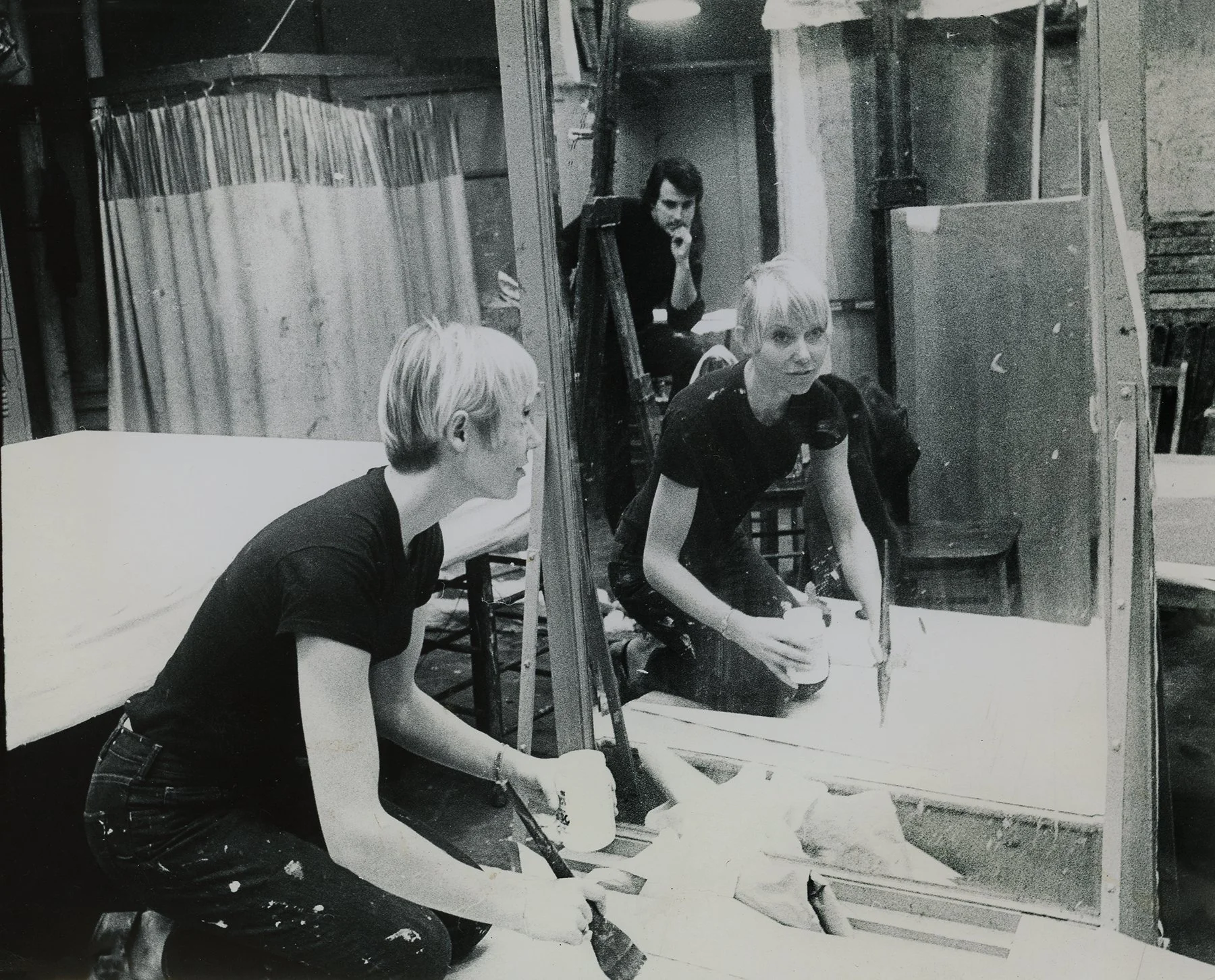
By 1966, Iria continued to deeply probe the Colour Field movement. She saturated large raw canvases with poured or sprayed colour but her staining technique was varied and complicated. She sometimes positioned paint cans and other objects on the unprimed canvas as it lay flat on the studio floor, thereby blocking the pigments and allowing the ghost shapes to remain. Subtle lines sometimes betray the use of a brush, and she might continue with sprays and splatters. Many of these paintings are optical forays into dreamlike worlds, often looking like aerial views, biomorphic forms, or explorations of the cosmos.
After surviving a serious accident in 1968 Leino converted to Buddhism in which she found a comforting and consistent philosophy. After her recovery, Leino embraced a monastic Buddhist discipline, embedding the insights she learned from her faith into her formal studio experiments. The first series of paintings that Leino created post recovery was her Elephant Series. Within Buddhism the elephant represents the enlightenment and reincarnations of Buddha. In Leino’s sumptuous Elephant paintings, the legs and trunks of the elephant are elegantly implied by their undulating abstract shapes, and their solid fields of curving colour with crisp edges appear to have been applied with a squeegee. For one full year, Iria focused on developing a karmic relationship with the elephant, a soulmate imparting wisdom and physical and mental strength. This ushered in her ongoing practice of painting as meditation, performed with classical music. The meditative approach continued with her next major series — the Buddhist Rain.Leino painstakingly overlaid thousands of diagonal strokes in horizontal rows on the canvas, suggesting a driving rain, upon a principal field of colour. For the first time, she also painted this new series on paper, including in pastels. Richly innovative and delicate, this was a progression that continued over four decades. Before every painting session Leino started with at least one hour of Buddhist chanting, Leino recalled;
“I had a Buddhist hymn ringing in my ears constantly, which I then painted onto the canvas. I had a Hindu mantra that had been given to me, but you were not supposed to stay it aloud. So, I repeated that in my paintings. Then came the visual side and now I only see the art.”
After 1969, and for the next fifteen years, there would be no signs of Iria returning to a brush. This partly explains why, after her death, no brushes could be found in her studio, only an assortment of trowels, scrapers, and squeegees. One of her large canvases from this period was purchased by Larry Aldrich and in 1973 exhibited in “Contemporary Reflections” at the Aldrich Museum of Contemporary Art. In 1973, Leino was included in the groundbreaking Women Choose Women, curated by Lucy Lippard, the first major large- scale presentation of female artists in New York at the New York Cultural Center. James Mellow’s review in the New York Times selected only three women whose abstractions were outstanding: “Alice Baber’s delicate veils of colour, Carmen Herrera’s incisive geometry in Cobalto Blanco, and Iria’s handsomely tapestried Wish Answered.” From the mid-1970s to her death, Leino garnered sporadic recognition in the form of museum exhibitions in Finland and Sweden, institutional patronage, as well as a multi-year installation at John F. Kennedy Airport’s Finnair terminal.
The 1960s and 1970s were a time of great creative and developmental experimentation for Iria and will be the focus of our upcoming exhibition. But even when Leino’s personal life felt overwhelming, her disciplined work ethic, dedicated and obsessive studio practice and unbridled spiritual connection through Buddhism, led to further extraordinary painterly experiments throughout her life up until her death in 2022. One such series are her striking Dreamings paintings developed throughout the 1980s. We are thrilled to be able to present a number of extraordinary examples of this series within the exhibition. The Dreaming series was created from 1987–1992 and represent the culmination of her painting through meditation. In these canvases Leino employed curving colourful lines forming shapes within which are enclosed´ thousands of short strokes, dabs, and dots. Sometimes those animated strokes exist as clusters forming shapes without linear borders and evoke the spiritual authenticity of the paintings of Indigenous Australian artists. This series of paintings also continue to evoke Iria’s reflections and memories of life in Finland’s forests — such as the tracks of woodland snails found on a smooth granite outcrop or the artists own wanderings.
In her lifetime, Leino rarely engaged with the gallery system. The artist instead opted for an existence devoted to her studio practice and her faith in Buddhism, and saw her work as a means of spiritual enlightenment rather than a purely commercial endeavour. After her death in 2022 an extraordinary lifetime of work of exceptional quality was rediscovered within her SoHo loft. Leino’s rich story and groundbreaking painting helps to broaden the story of 20th Century abstract painting in an incredibly powerful way. With recent acclaimed solo exhibitions in New York and Scandinavia and acquisitions to major European and American Institutional collections, Leino is rightly now being considered among the most important Scandinavian artistic discoveries of the past 50 years
Leino’s work is held in the collections of Finnish National Gallery, Helsinki; Heino Art Foundation, Helsinki; Hood Museum, USA; Amos Rex, Helsinki; New England Centre for Contemporary Art, Brooklyn, CT; Didrichsen Art Museum, Helsinki and the Aldrich Contemporary Art Museum, Ridgefield, CT. Iria will be included in a group show opening at Ateneum in Helsinki this October titled Arcana Borealis - Northern Women and Esotericism alongside artists such as Hilma af Klint. IRIA, a documentary directed by Janna Kyllästinen and produced by Kati Aho, is currently in production and a full biography of Iria Leino is currently being written by the curator of the Iria Leino Estate Peter Hastings Falk, with a view to publish in 2027.